Note
For detailed information about the Procedure for
BIS ISI Certification, visit:
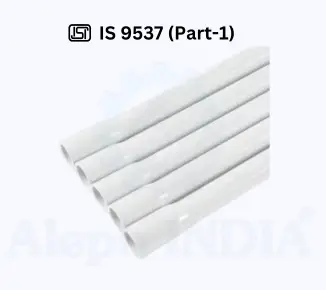
BIS certification is mandatory for Conduits for Electrical Installations as per IS 9537 (Part 1). This standard ensures that conduits, which provide safe passage for electrical wiring in residential, commercial, and industrial installations, meet stringent requirements of strength, safety, and durability. Conduits must conform to defined material, design, and performance criteria to ensure reliable protection against mechanical damage, electrical hazards, and environmental conditions. Certification under IS 9537 (Part 1) confirms that conduits have been rigorously tested for dimensional accuracy, mechanical properties, and resistance to heat, moisture, and impact, thereby ensuring safety and performance across electrical applications. Compliance reflects a manufacturer’s commitment to quality assurance, consumer safety, and adherence to national regulatory standards.
This Indian Standard specifies the general requirements applicable to all types of conduits used for electrical installations. It covers classification, dimensions, construction, mechanical properties, and test methods. The standard ensures conduits are manufactured from materials suitable for safe and long-term electrical installations, free from defects that may impair performance. IS 9537 (Part 1) also lays down provisions for marking and packaging to ensure product traceability and uniformity, helping installers and end-users select conduits with confidence.
| Product Name | Conduits for electrical installations, Part 1: General requirements |
| Applicable Indian Standard | IS 9537 ( Part I ) 1980 |
| Applicable Certification Scheme | Product Certification Scheme (ISI Mark Scheme) Scheme 1 - Schedule 2 |
| Compliance Requirement | Mandatory |
| Quality Control Order | -- |
| Scope as per Standard | This standard applies to conduits of circular cross section for the protection of conductors and/or cables in electrical installations. |
BIS certification under IS 9537 (Part 1) provides assurance of safety, quality, and reliability. For manufacturers, it enhances credibility, assures compliance with statutory requirements, and facilitates market acceptance both in India and internationally. For consumers and industries, certified conduits provide confidence in performance, reducing risks of electrical failures, fire hazards, and premature wear. Certification also ensures uniformity in quality across the market, protecting end-users and electrical systems from substandard or unsafe products.
A streamlined process designed to ensure compliance, quality, and efficiency at every step.
Preparation and submission of required documents.
Filing the application with BIS along with applicable fees.
Inspection and evaluation of manufacturing facility.
Testing of product samples in BIS recognized laboratory.
Successful evaluation and grant of BIS ISI Mark license.
Watch our detailed video to understand each step involved in obtaining BIS ISI Mark Certification.
For detailed information about the Procedure for
BIS ISI Certification, visit:
The estimated time frame for obtaining BIS certification under IS 9537 Part 1 is:
BIS certification under IS 9537 (Part 1) plays a vital role in safeguarding the reliability and safety of electrical installations. By complying with this standard, manufacturers demonstrate their commitment to delivering high-quality conduits that meet national standards and customer expectations. Certified conduits ensure durability, performance, and safety in critical electrical applications, thus protecting consumer interests and enhancing trust in the electrical industry.
Partner with Aleph INDIA for complete guidance and end-to-end support in obtaining BIS certification for conduits under IS 9537 (Part 1), ensuring your products achieve seamless acceptance in both domestic and international markets.

Partner with Aleph INDIA to simplify your BIS certification journey and ensure full compliance with IS 9537 Part 1 for robust and high-performance packaging solutions.
Yes, BIS certification is mandatory for conduits as per IS 9537 (Part 1). This ensures they meet safety, durability, and performance requirements for use in electrical installations.
Tests include checks for dimensional accuracy, mechanical strength, resistance to heat, moisture, impact, and bending to ensure the conduits provide reliable protection in electrical systems.
The standard timeframe is around 30 days for Indian manufacturers and 180 days for foreign manufacturers, depending on factory inspection and test reports.
Certification assures manufacturers of compliance with statutory standards, improves market credibility, and provides consumers with confidence in product safety, reliability, and long-term performance.
 Kazakhstan
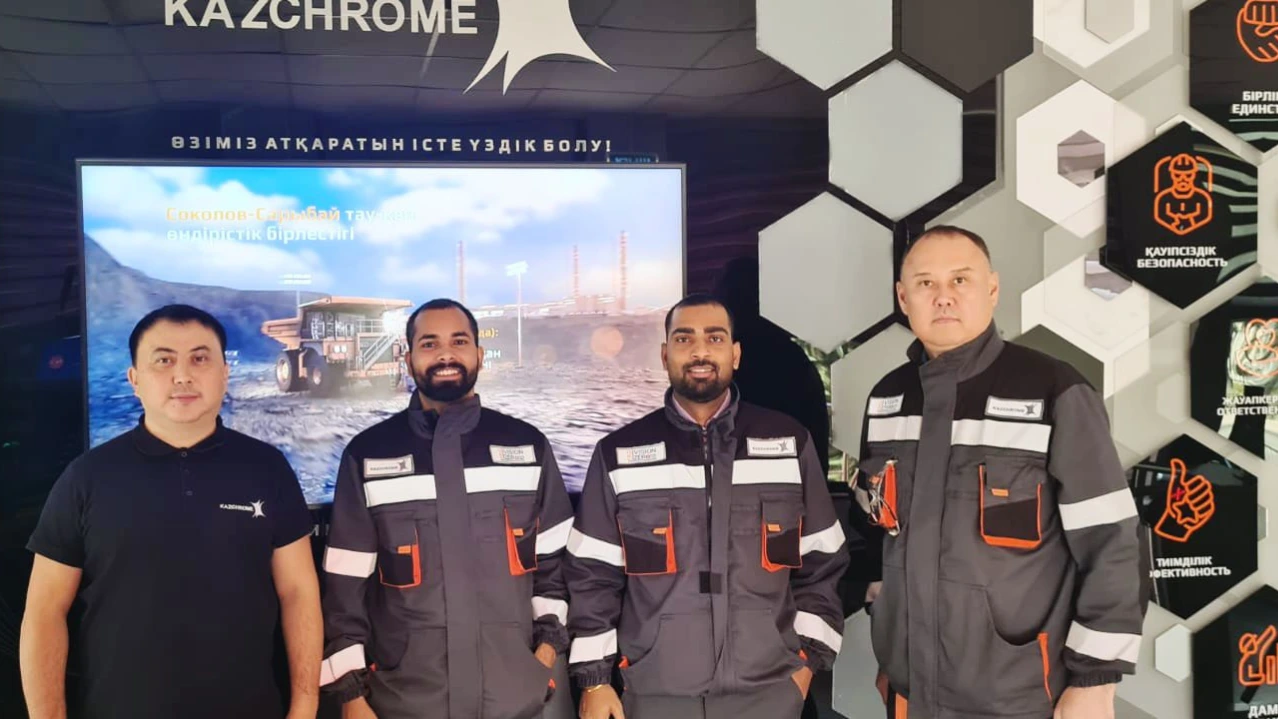
 ALEPH INDIA is proud to announce the 𝐬𝐮𝐜𝐜𝐞𝐬𝐬𝐟𝐮𝐥 𝐜𝐨𝐦𝐩𝐥𝐞𝐭𝐢𝐨𝐧 𝐨𝐟 𝐁𝐈𝐒 𝐚𝐮𝐝𝐢𝐭 𝐟𝐨𝐫 Ferro-chromium , one of Kazakhstan's leading Ferro-chromium manufacturers, for co...

 Japan
Japan Another Successful Audit completed by the Bureau of Indian Standards (BIS)! Proud moment for Aleph INDIA Group as our client, M/S JX Metals Smelting Co., Ltd...

 Taiwan
 Another Successful Audit completed by the Bureau of Indian Standards! Proud moment as Aleph INDIA Group's client, M/S. GSLIDE CORPORATION.(Taiwan) , aces the...
Hear from industry leaders who have experienced the
impact of partnering with
Aleph.

 Aleph INDIA
Sr. Sales Manager
IVicon Security Tech Private Ltd
Aleph INDIA
Project Manager | Remidio
Innovation Solutions Pvt Ltd
Aleph INDIA
CEO | Makercubs
Technologies Pvt Ltd
Aleph INDIA
Technical Vice President |
AIR LIQUIDE MEDICAL SYSTEMS PRIVATE LIMITED