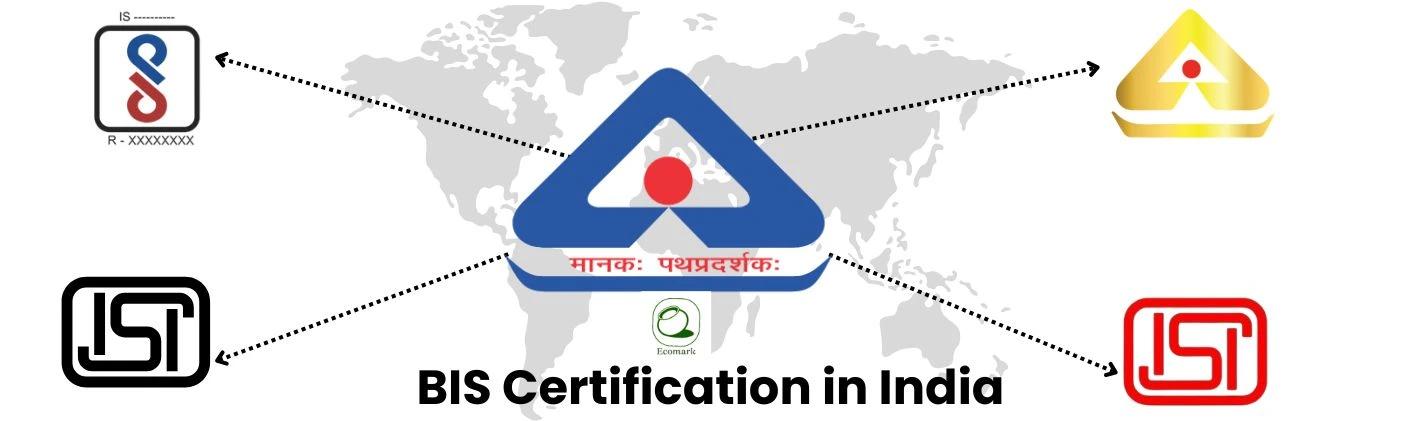
Introduction of BIS Certification in India
India is a fast growing market, with a growing demand for safe and reliable products. The Government of India has set many standards for the quality and safety of products before they are sold to consumers, and ensure that many products satisfy these requirements. This is enforced by BIS Certification.
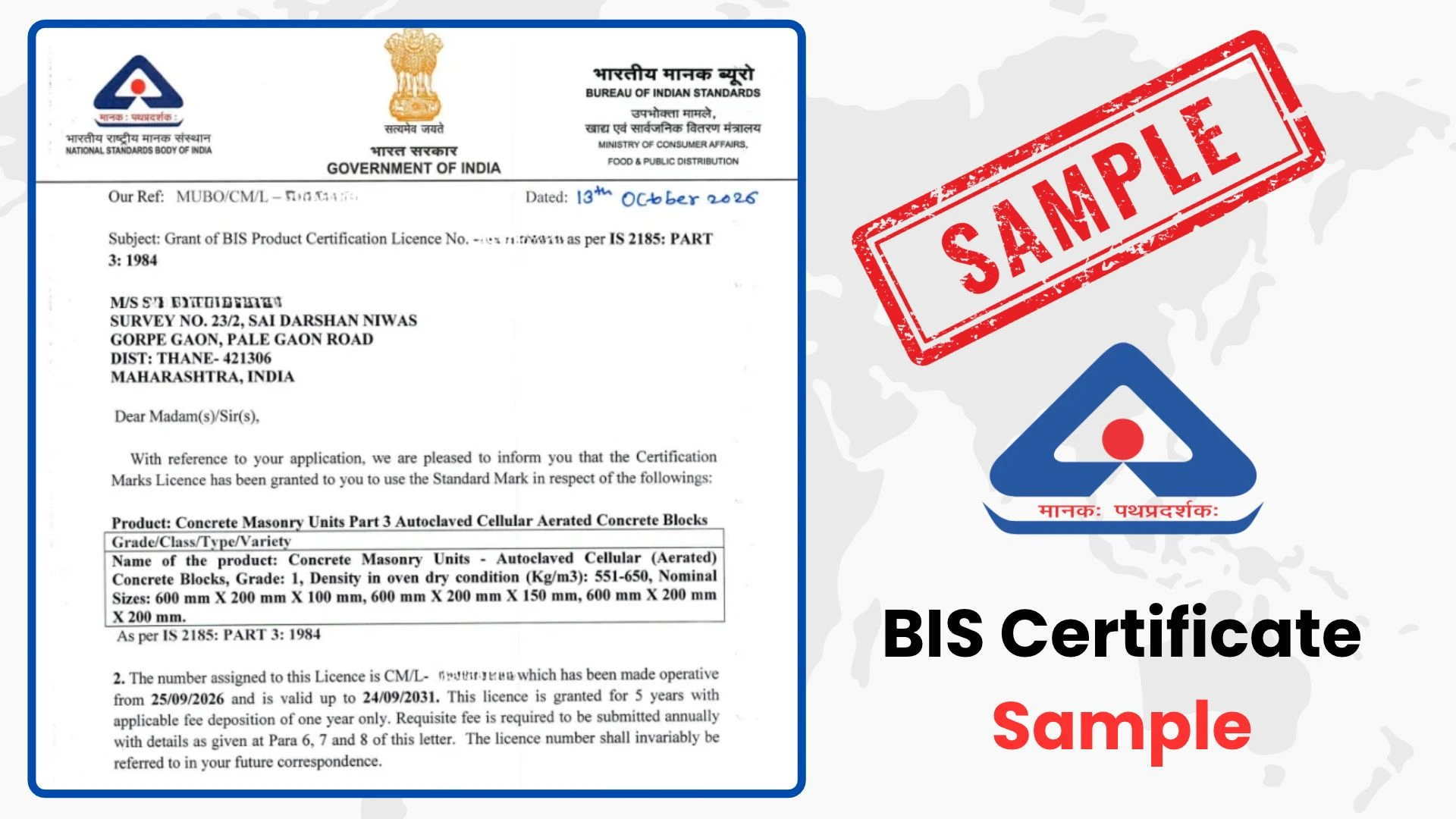
BIS certification, given by the Bureau of Indian Standards (BIS), the National Standards Authority under the Ministry of Consumer Affairs, Food & Public Distribution. It certifies that a product meets the applicable Indian Standards (IS). BIS took over the functions of the Indian Standards Institution (ISI) in 1987.
A valid BIS certificate is mandatory for products which are subject to mandatory regulation like electronics, electrical appliances, steel products, cement, toys, chemicals and automotive components. If it is not there, these products can't be imported, cleared through customs or sold in India. Depending on the product, manufacturers need either:
ISI certification (BIS) (foreign manufacturers certification scheme (FMCS) for foreign manufacturers) or Registration in BIS under Compulsory Registration Scheme (CRS).
As a manufacturer, importer or startup, BIS certification ensures that you will not encounter any legal issues, earn increased trust from buyers and dealers and enjoy market acceptance. This guide, written by Shravan Kumar, answers them in plain language. It covers the schemes, documents, process, costs, validity and the mistakes that waste the most time.
What Is BIS Certification?
BIS certification is a conformity assessment system. A product is tested against a specific Indian Standard (IS). For some schemes, the factory is inspected too. If everything checks out, BIS grants a licence or registration, and the product may carry the BIS mark.
It does two jobs at once. It is a legal entry ticket to the Indian market, and it is a trust signal that buyers recognise.
What does "BIS certified" mean? A BIS certified product conforms to the applicable Indian Standard. It has been tested in a BIS-recognised laboratory, and it is made under approved quality controls. In practice, that means it is permitted for sale or import in India.
What is a BIS certificate? It is the official document confirming this compliance. Once you hold it, you may manufacture the product in India, or import and sell it there, and you display either the ISI mark or a BIS registration number.
About the Bureau of Indian Standards
BIS is India's national standards body. It works under the Ministry of Consumer Affairs, Food and Public Distribution. It replaced the Indian Standards Institution (ISI) on 1 April 1987, which is why the old name survives in the "ISI mark."
Its work falls into three areas: writing Indian Standards, running certification and registration schemes, and operating a network of recognised laboratories and hallmarking centres.
Why Is BIS Certification Mandatory?
The government notifies products through Quality Control Orders (QCOs). Once a product is covered, the rule applies to Indian manufacturers, foreign manufacturers and importers alike. Over 400 product categories are now covered, and the list keeps growing.
The purpose is straightforward:
- Protect public health and consumer safety
- Keep substandard or unsafe goods out of the market
- Maintain one national quality benchmark
- Regulate imports
Mandatory vs Voluntary Certification
Not every product needs BIS approval. Certification is mandatory only for products notified under a QCO. For everything else it is voluntary. Many manufacturers still choose it, because the ISI mark gives them an edge over uncertified competitors. If you are unsure where your product sits, check the official BIS lists or ask a compliance expert before you place an order.
Types of BIS Certification
1. ISI Mark Certification (Scheme I)
This is the best-known BIS scheme. It covers products such as cement, steel, cables, safety glass, wheels, pressure cookers, kitchen appliances and many chemicals. It involves sample testing in a recognised lab, a factory inspection and ongoing surveillance after the licence is granted.
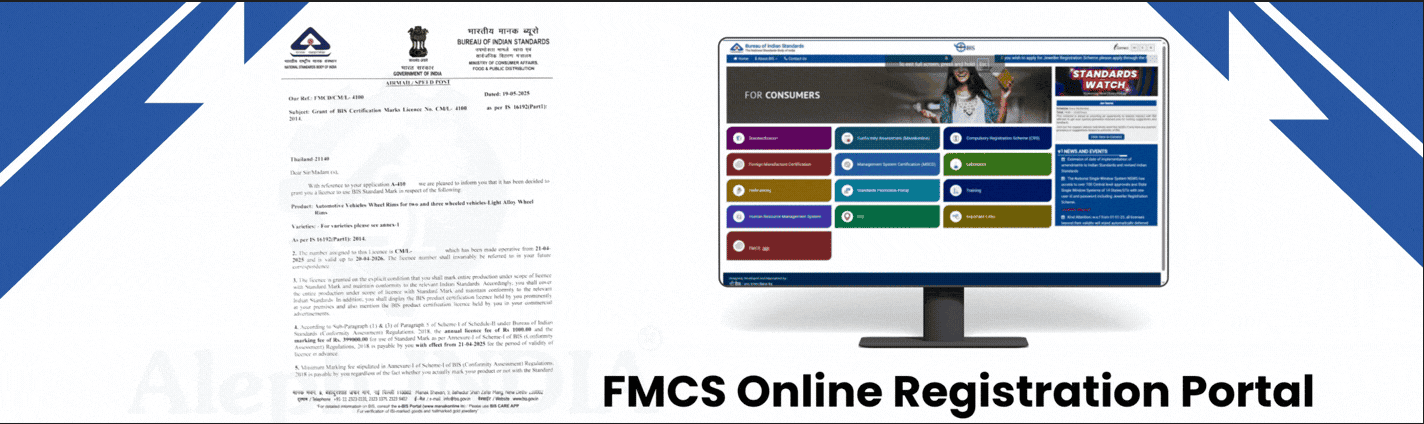
2. FMCS: Foreign Manufacturers Certification Scheme
FMCS is the ISI route for factories outside India. The overseas manufacturer appoints an Authorized Indian Representative (AIR), who files the application and deals with BIS. The factory is audited, samples are tested, and the licence is issued to the foreign manufacturer.
3. CRS: Compulsory Registration Scheme (Scheme II)
CRS began in 2012 and mainly covers electronics and IT goods. Examples are mobile phones, chargers, power adapters, LED lamps, monitors, cameras, batteries and solar modules. There is no factory audit. BIS reviews documents and test reports from a recognised lab. The registration is issued in the manufacturer's name and must be obtained before import or sale.
4. Hallmarking
This applies to gold and silver jewellery. Articles are tested for purity at BIS-recognised assaying and hallmarking centres, and jewellers must be registered to sell hallmarked items.
5. System Certification
BIS also grants system certification based on standards such as ISO 9001 for quality management. This is not a product approval. It shows that an organisation runs its processes well, and some schemes ask for a QMS certificate as part of the file.
6. Other product certification schemes
BIS runs specific schemes for selected product groups, including a simplified route for certain voluntary products.
ISI vs CRS at a Glance
| Feature | ISI / FMCS (Scheme I) | CRS (Scheme II) |
| Factory audit | Yes, on-site | No |
| Product testing | Yes | Yes, in recognised labs |
| Typical products | Steel, cement, cables, tyres, toys, chemicals | Phones, adapters, LED lamps, monitors, batteries |
| Mark | ISI mark | CRS logo and R-number |
| Licence number | CM/L number | R-number |
| Typical validity | Generally 5 years | Generally 5 years |
| Typical timeline | Longer | Shorter |
What Happened to BIS Scheme X?
Some older pages still describe Scheme X as a mandatory route for machinery and electrical equipment. That is outdated. After repeated delays, it was announced in January 2026 that Scheme X would no longer be required. Individual parts and components may still fall under ISI or CRS, so check your bill of materials and confirm the latest position on the BIS website.
Who Needs BIS Certification?
- Indian manufacturers of notified products
- Foreign manufacturers exporting to India
- Importers and brand owners bringing in BIS-mandated goods
- OEMs and suppliers working on government and infrastructure projects, where BIS proof is often required for tenders
Products That Need BIS Certification
The exact list changes often, so treat these as broad groups:
- Electronics and IT: Phones, laptops, monitors, adapters, power banks, CCTV cameras
- Electrical goods: Cables, switches, fans, geysers, LED lighting
- Building materials: Cement, steel, pipes, safety glass
- Automotive parts: Helmets, wheels, tyres, batteries
- Consumer goods: Toys, footwear, pressure cookers, packaged drinking water
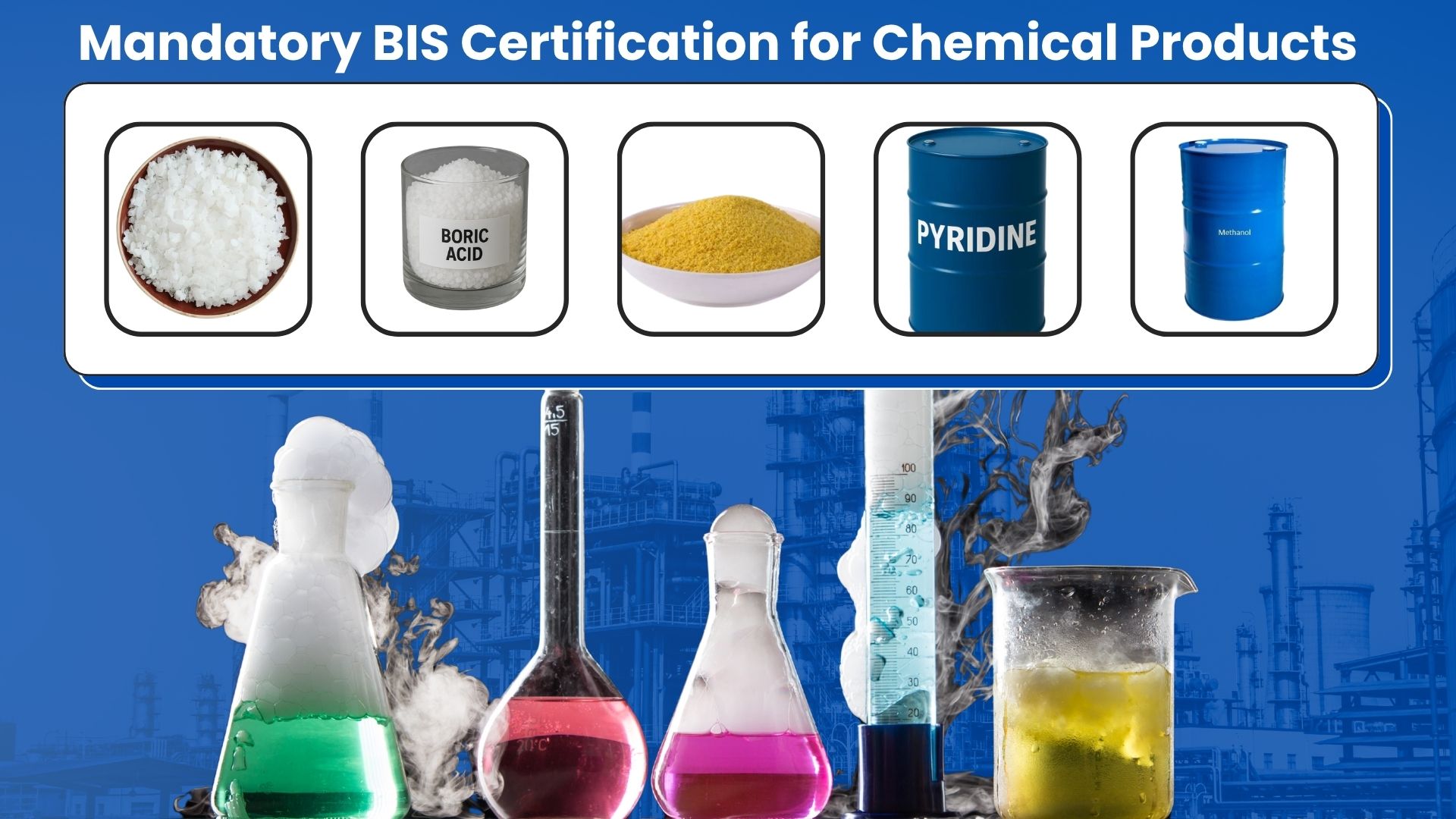
- Chemicals, fertilisers and textiles
- Jewellery: Gold and silver, via hallmarking
A warning on HS codes. Customs lookup tools can give misleading answers about BIS applicability. The reliable method is to match your product with its Indian Standard and the relevant QCO.
Benefits of BIS Certification
1. Legal compliance. You avoid fines, seizure and import rejection.
2. Consumer safety. Tested products carry less risk of harm.
3. Quality assurance. Preparing for audits and tests tightens your process.
4. Market access. Retailers, dealers and distributors prefer marked products.
5. Competitive edge. Certified products stand out against uncertified ones.
6. Tender eligibility. Government and infrastructure buyers often insist on it.
7. Faster customs clearance. Valid paperwork means fewer holds.
8. Fewer complaints and recalls. Tested products fail less often.
9. Lower legal risk. Certification shows due diligence if a claim arises.
10. Brand reputation. Buyers trust a recognised mark.
Documents Required for BIS Certification
Exact requirements depend on the scheme and the product. These are the documents most commonly asked for:
- Application form and cover letter
- Business registration proof (incorporation certificate, GST, import-export code where relevant)
- Address proof of the manufacturer or importer
- Authorization letter if the applicant is not the manufacturer
- Product technical datasheet and model list
- Test reports from a BIS-recognised lab
- Bill of materials (BOM)
- Technical construction file describing design and operation
- Declaration of conformity with the relevant Indian Standard
- Manufacturing process flow and quality control plan
- Trademark registration certificate, mainly for ISI
- QMS certificate (such as ISO 9001) where applicable
- Factory details and testing equipment list for ISI and FMCS
- Authorization letter for the Authorized Indian Representative, for foreign applicants
- MSME or SSI certificate, if applicable
Clean paperwork is the biggest time saver in the whole process.
BIS Certification Process: Step by Step
- Identify the scheme. Confirm the product, its Indian Standard and whether ISI, FMCS or CRS applies.
- Appoint an AIR (foreign manufacturers only).
- Prepare documents and submit the application on the BIS portal with the fees.
- Document review BIS checks the file for completeness and accuracy.
- Sample testing Samples go to a BIS-recognised lab and are tested strictly against the Indian Standard. A pre-check in your own lab can save weeks.
- Factory inspection (ISI and FMCS). BIS audits the actual manufacturing site. If a product is made at several sites, the one doing the final quality-relevant step is audited. A warehouse does not qualify.
- Evaluation BIS experts review test results and audit findings.
- Grant The licence or registration is issued.
- MarkingYou apply the ISI mark or CRS logo.
- Surveillance and renewal BIS can run periodic audits and sample checks after grant.
The Role of the Authorized Indian Representative
An AIR is a legally required local contact for foreign manufacturers. The AIR must be based in India, have enough technical knowledge to answer BIS queries, and as a rule can represent only one foreign manufacturer. Because the AIR carries real legal responsibility, choose carefully.
How Products Must Be Marked
After certification, display:
- The ISI mark (Scheme I) or CRS logo (Scheme II)
- The licence number: CM/L for ISI, or R-number for CRS
- The Indian Standard number
Wrong or missing marking can get a consignment rejected even when your certificate is valid.
Validity and Renewal
BIS certification is not permanent. Validity depends on the scheme and the grant terms. ISI licences usually start at five years. CRS registrations are generally valid for five years. At renewal, BIS can grant periods between one and five years.
Some points to remember:
- Apply for renewal before expiry. A late application can attract an extra fee, with figures like ₹5,000 quoted by consultants.
- Renewal usually involves annual marking and licence fees, and may include retesting.
- During validity, BIS can ask for fresh test reports or pull market samples.
- Report changes. A new design, key component, raw material or material supplier may need a modification application.
- BIS does not alert you about new QCOs or amended standards. Monitor its website, or hire someone who does.
BIS Certification Cost
There is no single price. Consultants often quote a broad range of roughly ₹25,000 to ₹2 lakh for many cases, but complex products and multi-model, multi-factory projects can go higher. The cost is made up of:
- Application fee paid to BIS at submission
- Testing charges at the lab, which rise with the number of models
- Annual licence and marking fees
- Audit expenses for ISI and FMCS, including auditor travel and stay
- AIR fees for foreign applicants
- Consultant fees for documents, coordination and follow-up
- Indirect costs such as sample shipping and redesign after a failed test
Always ask for a written estimate with each item listed separately. A very low quote that leaves out testing or audits usually costs more in the end.
How Long Does It Take?
Timelines vary with scheme and readiness. As a rough guide, Indian manufacturers often see 30 to 90 days, CRS registrations tend to take a few months, and foreign-manufacturer ISI projects can run 3 to 9 months because of the audit. Delays usually come from incomplete files, lab backlogs, failed tests and slow replies to BIS queries. Start before you place bulk orders.
CE, ISO or FCC: Can They Replace BIS?
No. A product certified to international standards cannot skip BIS if it is on the mandatory list. CE is a European mark and holds no legal value for Indian customs. Existing test reports and technical files can still serve as a foundation, but the product must be assessed against Indian Standards, usually with testing in India. ISO 9001 certifies a management system, not a product.
What Happens If You Sell Without BIS Certification?
Selling or importing a notified product without approval can lead to:
- Import rejection or goods held at customs
- Seizure and removal from the market
- Penalties, fines and legal action under the BIS Act, 2016
- Product recalls
- Delisting from online marketplaces and lost buyer trust
- Compared with these, the cost of certification is small.
How to Check If a Product Is BIS Certified
Use the official BIS website or the BIS Care app. Search by licence number, registration number or company name, then check that the status, validity and product match what is printed on your item. Never rely only on a copy sent by a seller.
Common Mistakes to Avoid
- Assuming CE, FCC or ISO is enough
- Choosing the wrong scheme
- Forgetting that parts and components may need their own approval
- Testing too late
- Skipping change reports
- Missing renewals
- Not tracking new QCOs
Get the Right Support: How Aleph India Can Help
You can file a BIS application on your own, but it has many moving parts. One missing document or one wrong scheme choice can cost you weeks. This is where Aleph India steps in.
Aleph India supports manufacturers, importers and brand owners through the whole BIS journey:
- Applicability check: We confirm whether your product needs ISI, FMCS, CRS or no mandatory certification at all.
- Document preparation: We prepare and review the full file, including technical documents, BOM, declarations and authorization letters.
- Testing coordination: We arrange sample testing with BIS-recognised laboratories and track the results.
- Factory audit support: We prepare your team and facility for the BIS inspection.
- AIR services: For foreign manufacturers, we help with the Authorized Indian Representative requirement.
- Marking guidance: We make sure the ISI mark, CRS logo and licence numbers are displayed correctly.
- Renewals and updates: We manage renewals, change reports and QCO monitoring, so you do not miss a deadline or a new rule.
Not sure which BIS scheme applies to your product? Talk to the Aleph India team for a quick applicability check and a clear, itemised cost estimate.

BIS certification looks heavy at first, but the logic is simple. Pick the right scheme, prepare clean documents, pass the tests, pass the audit if one applies, mark the product correctly and keep the licence alive. Businesses that plan for it early lose the least time and money.
If you are unsure where you stand, start with one question: is my product covered by a Quality Control Order? Everything else follows from that answer.
If you want a clear answer on the scheme, timeline and cost for your product, Aleph India can guide you from the first document to the final licence.
[ +91 9990136656 | [email protected] | https://alephindia.in/ ]
Frequently Asked Questions
1.What is BIS certification in simple words?
It is an Indian government approval showing that a product meets the required safety and quality standard. Without it, notified products cannot be sold or imported in India.
2.Is BIS certification mandatory for all products?
No. It is mandatory only for products notified under Quality Control Orders. Others can apply voluntarily.
3.What is the difference between BIS certification and BIS registration?
Certification usually means the ISI route, with a factory audit. Registration refers to CRS, mainly for electronics and IT goods, with no audit.
4.Can foreign manufacturers get BIS certification?
Yes. They apply under FMCS through an Authorized Indian Representative.
5.How long is a BIS certificate valid?
ISI licences typically start at one to two years. CRS registrations are generally valid for five years. Both are renewable.
6.How much does BIS certification cost?
It depends on the product, scheme, models and factories. Costs include fees, testing, audits, AIR charges and consulting.
7.Are there any exemptions?
Products not covered by a QCO do not need mandatory certification. Check the notification for your specific product.
8.Can an internationally certified product skip BIS?
No. CE, FCC or ISO do not replace BIS for notified products.
9.How does BIS keep certificates genuine?
Through licence and registration records on its portal, surveillance audits and market sampling.
10.How can I stay updated on BIS rules?
Follow new QCOs and standard amendments on the official BIS website. BIS does not notify certificate holders directly.
11.What is the penalty for selling without BIS?
Penalties can include fines, seizure, import rejection and legal action under the BIS Act, 2016.
12.Who can help me get BIS certification in India?
An experienced BIS consultant can manage scheme selection, documents, testing, audit and renewals for you. Aleph India offers end-to-end BIS support for Indian and foreign manufacturers, including importers and brand owners.