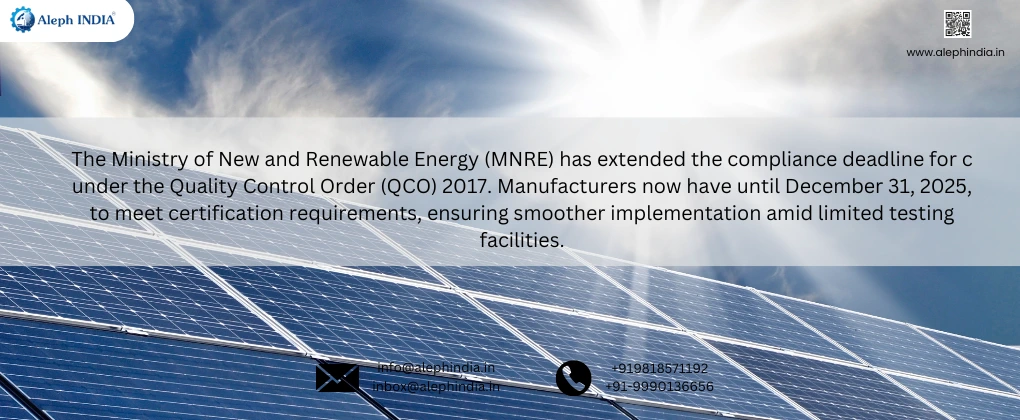
The Ministry of New and Renewable Energy (MNRE) has issued a key update concerning the Solar Photovoltaic (SPV) inverters, particularly those with capacities exceeding 100 kW. According to a notification released on January 27, 2025, the deadline for compliance with the Quality Control Order (QCO) 2017 has been extended for these larger SPV inverters. Here’s what manufacturers, stakeholders, and industry professionals need to know about this important change.
Key Details of the Notification
The original QCO, which came into effect on September 5, 2018, established mandatory requirements for the registration of various solar photovoltaic products and components. Specifically, the regulation required manufacturers to adhere to quality standards for SPV inverters, which are critical components in solar power systems.
Previously, the Central Government had issued a temporary extension for SPV inverters with capacities above 100 kW, allowing them to be self-certified until December 31, 2024, or until further notice. However, the latest notification has provided an additional extension, pushing the compliance deadline for these products to December 31, 2025, or until further orders.
Reasons Behind the Extension
The primary reason for this extension is the limited availability of testing facilities for SPV inverters with higher capacities. As the availability of accredited test labs is still not sufficient to accommodate the growing demand for testing these products, the government has provided more time to ensure smooth and compliant implementation of the QCO.
What Does This Mean for Manufacturers?
Manufacturers of SPV inverters exceeding 100 kW now have additional time to comply with the QCO 2017 requirements. However, it’s important to note that this extension is conditional upon manufacturers meeting certain criteria:
- Self-certification: Manufacturers can continue to self-certify their products as per the earlier provisions, allowing them to maintain production and sales while ensuring compliance.
- IEC Certification: Manufacturers must possess valid International Electrotechnical Commission (IEC) certifications corresponding to the relevant Indian Standards (IS) for SPV inverters:
- For Item No. 4: IS 16221(Part 2):2015/IEC 62109-2:2011
- For Item No. 5: IS 16169:2014/IEC 62116:2008
- Test Reports: Manufacturers should also provide test reports from accredited laboratories to demonstrate the quality and compliance of their products.
What Does This Mean for the Industry?
The extension of the compliance deadline for high-capacity SPV inverters is expected to provide manufacturers with much-needed flexibility. With more time to meet the quality standards and gain the necessary certifications, the industry can continue to grow and contribute to India's renewable energy goals without facing bottlenecks due to testing infrastructure constraints.
For stakeholders, including solar project developers and buyers, this move ensures that the market will continue to have access to certified, high-quality solar equipment while the industry scales up testing capabilities.
Conclusion
The latest extension provided by the Ministry of New and Renewable Energy reflects a pragmatic approach to dealing with the challenges posed by limited testing resources. While the deadline for compliance with the QCO for high-capacity SPV inverters has been extended to December 31, 2025, manufacturers must ensure that they meet the required certification and testing standards to maintain product quality and compliance.
We encourage all stakeholders in the solar industry to keep an eye on future updates and ensure their products remain in line with the latest regulatory requirements. For further details, manufacturers are advised to refer to the official notification published in the Gazette of India.
Stay tuned for further updates on this regulation and its impact on the solar industry!