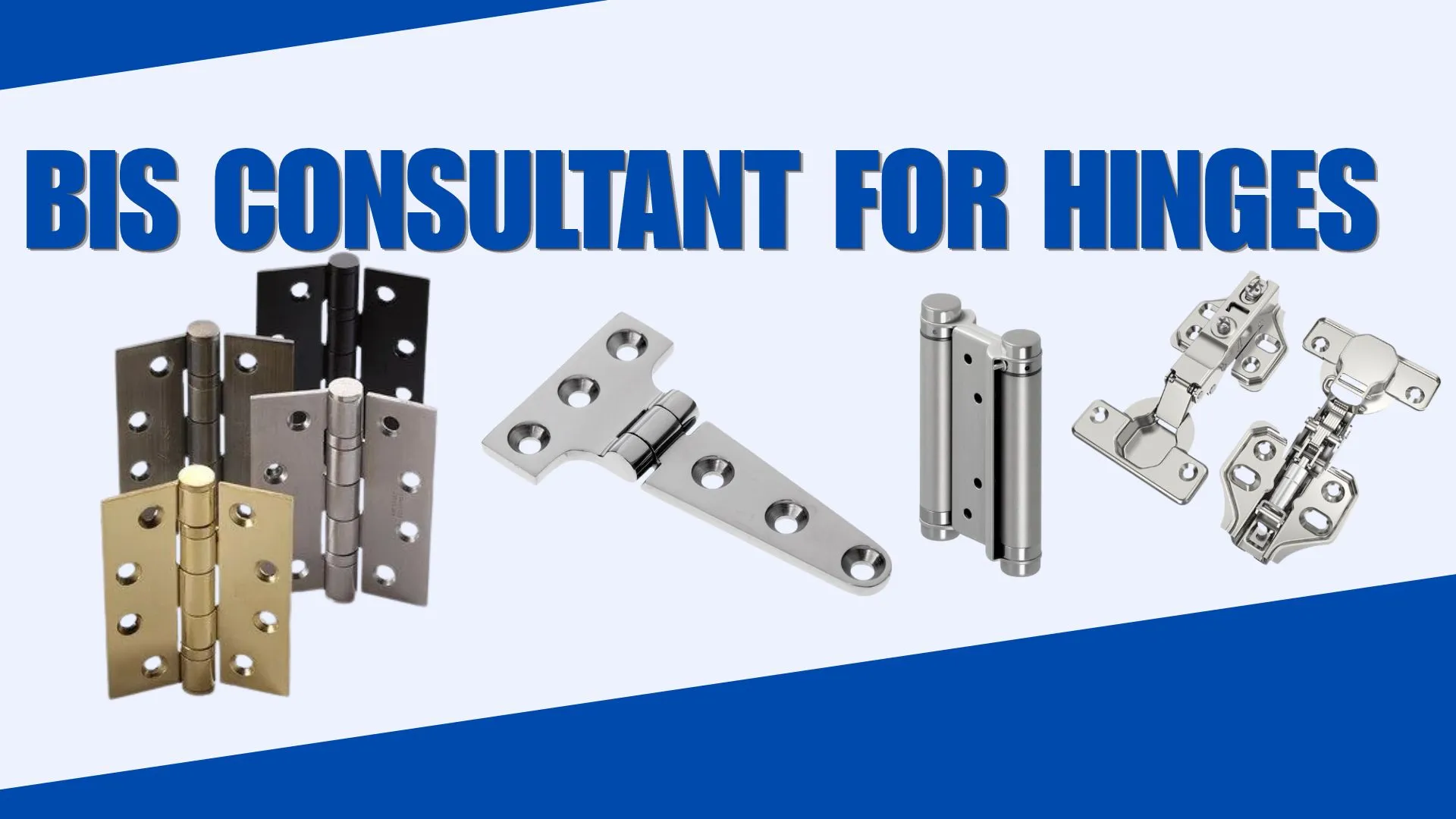
Hinges are essential hardware components for various applications such as doors, windows, cabinets, furniture, shutters etc. and also in industries. These components help in ensuring smooth movement, proper alignment, durability and operational safety of the concerned product. To ensure consistent product quality and reliability, the Government of India notified the Hinges (Quality Control) Orders for specified categories of hinges.
As per the Quality Control Orders (QCOs), the manufacturers and importers concerned must hold a valid Bureau of Indian Standards (BIS) licence and affix the ISI Mark on the concerned products, before they can market the product in India, as per the specified exemptions.
It is time consuming and expensive for a manufacturer/ importer to get the product examined and certified by BIS. Also, there are several other Bureau of Indian Standards regulations which are applicable to hinges and related products. Therefore, it is advised that a professional BIS consultant should be appointed to understand and interpret the applicability of various BIS regulations and handle the certification process in an effective manner.
Aleph India is a BIS certification consultancy and is working with manufacturers and other businesses in the same capacity to comply with various requirements, help with documentation, product testing and coordination and finally with the licensing of BIS.
What Is BIS Certification for Hinges?
The Bureau of Indian Standards (BIS) was established as India’s national standards body with the purpose of developing Indian Standards and product certification schemes.
BIS certification of hinges indicates that the certified product meets the requirements of the applicable Indian Standard concerning its quality, dimensions, strength, durability and performance.
Hinges subject to the Hinges Quality Control Orders (other than plain bearer hinges and hinges of electronic circuit boards) shall meet the requirements of the relevant Indian Standards and shall be marked with the ISI mark under a BIS license.
The BIS license is mandatory for domestic and foreign manufacturers to supply covered products in India.
Hinges Covered Under BIS Certification
Different types of hinges are specified in different Indian Standards. It is the manufacturer's responsibility to identify the standard applicable to their product based on design, material and construction.
Some important Indian Standards for hinges include:
| Type of Hinges | Applicable Indian Standard |
| Stainless Steel Butt Hinges | IS 12817:2020 |
| Steel Butt Hinges | IS 1341:2018 |
| Non-Ferrous Metal Butt Hinges | IS 205:1992 |
| Tee and Strap Hinges | IS 206:2010 |
| Parliament Hinges | IS 362:1991 |
| Continuous (Piano) Hinges | IS 3818:1992 |
| Double-Acting Spring Hinges | IS 453:1993 |
| Cabinet Hinges | IS 18297:2023 |
| Steel Back Flap Hinges | IS 3843:1995 |
Hinges Quality Control Order (QCO)
The Ministry of Commerce and Industry’s Department for Promotion of Industry and Internal Trade (DPIIT) has notified Quality Control Orders (QCO) for certain categories of hinges.
- These QCO will facilitate achieving uniform quality and consistency in the performance of hinges, enhance durability of hinges, and protect consumers from harm by sub-standard hinges.
- The QCO will also promote compliance of the relevant Indian Standards.
- The QCO will regulate the manufacture, import, distribution and sale of such hinges.
- The QCO are enforceable from the date notified.
Manufacturers and importers of hinges should check the notified QCO, the date of implementation, the product coverage, and the available exemptions before manufacturing/ importing regulated hinges.
The QCO and notified amendments and related orders of 2023 and 2024 should be referred for detail.
Why Is BIS Certification Mandatory for Hinges?
Obtaining BIS certification is important for hinge manufacturers and importers to meet a significant regulatory requirement.
Reasons for BIS Certification include:
- Legal Compliance: All hinge manufacturers and importers need to comply with the Quality Control Orders (QCOs) prior to offering their regulated products in the Indian market.
- Product Quality Assurance: Certification is necessary to ascertain that hinges conform to the prescribed requirements of dimension, material, strength and performance.
- Consumer Confidence: The presence of the ISI mark on the product provides an assurance to the buyers that the product has been certified against the concerned Indian Standards.
- Market Access: Products with the BIS licence have unrestricted market access and legal right for sale of such products.
- Business Reputation: Compliance strengthens business credibility and improves confidence of distributors, contractors, furniture manufacturers, and institutional buyers.
BIS Certification Process for Hinges
Obtaining a BIS license for hinges implies that the manufacturers have complied with the prescribed technical and legal requirements. The general certification process comprises the following:
Step 1: Identify Applicable Indian Standard
The first step is to identify the Indian Standard applicable to the hinge product. This would depend on the type of hinge product, material, design and technical specifications.
Step 2: Prepare Technical Documentation
The manufacturer should arrange the company, factory, manufacturing and product-related documents, as may be required.
Step 3: Product Sample Testing
As applicable, hinge samples are sent to BIS-recognized laboratories for testing to determine compliance with the Indian Standard concerned. The nature of the testing would depend on the concerned product standard.
Step 4: Submit BIS Application
After the aforesaid procedure, the applicant is required to submit the BIS application, through the appropriate online platform, along with the required information and documents.
Step 5: Factory Inspection
BIS officers assess the manufacturing facility to evaluate the company’s capability to manufacture the product in conformity with the concerned standard.
Step 6: Grant of BIS Licence
Upon successful completion of the concerned testing, assessment and evaluation by the BIS, the certificate of compliance would be issued by BIS.
Step 7: Use of ISI Mark
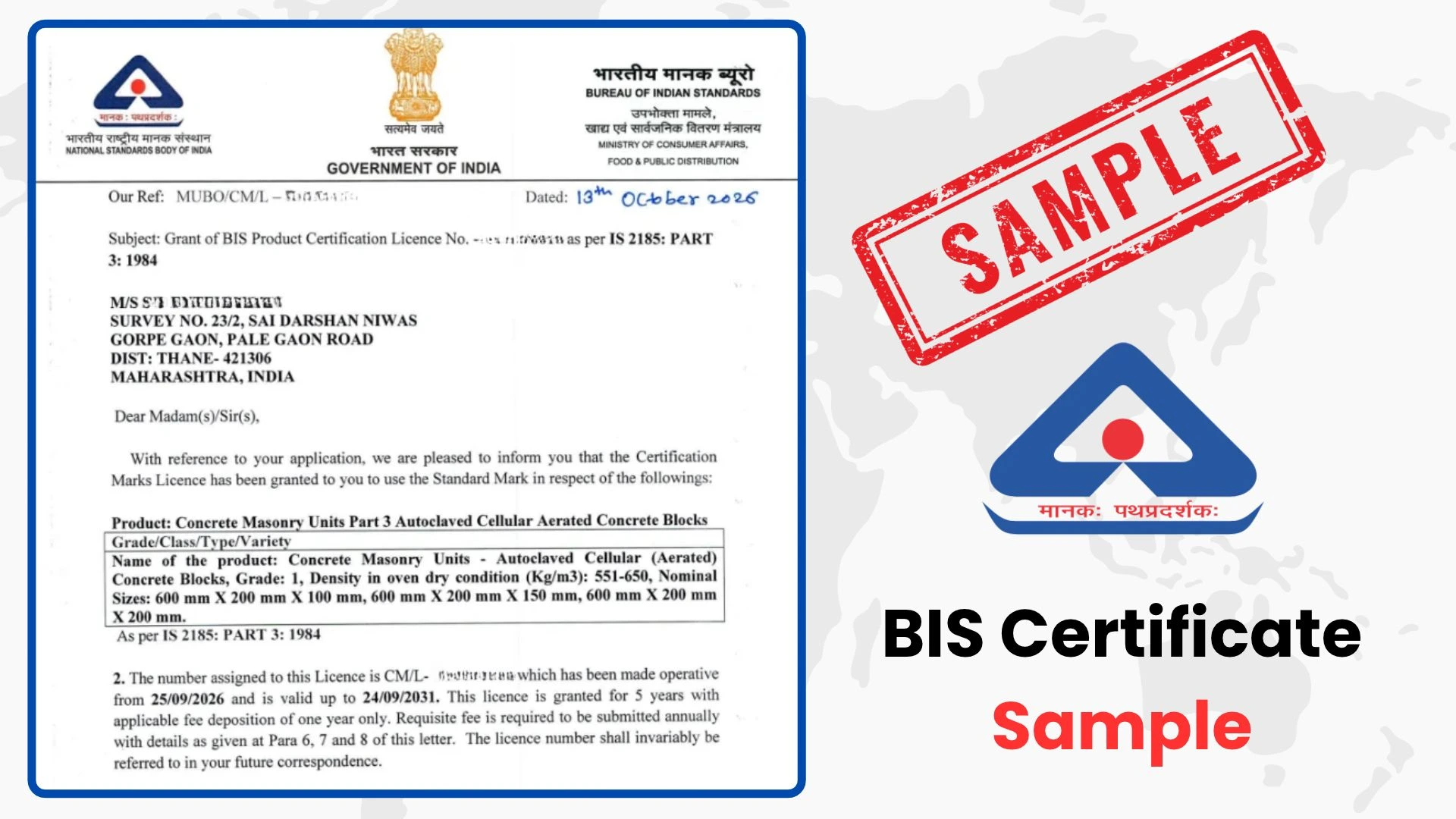
Upon issue of the certificate, the manufacturer is authorized to use the ISI Mark in conformity with the specified CM/L mark.
Documents Required for BIS Certification of Hinges
Before a manufacturer can begin the BIS certification process, proper documentation must be prepared. Requirements vary from manufacturing unit to unit, product category to category, and certification scheme to scheme.
| Document Category | Required Documents |
| Company Documents | GST Certificate, company registration documents, PAN, contact details |
| Factory Documents | Factory address proof, factory layout, rent agreement or ownership documents |
| Manufacturing Details | Manufacturing process flow chart, machinery list, installed production capacity |
| Raw Material Details | Raw material list, supplier details, purchase invoices and test certificates |
| Testing Documents | Testing equipment list, calibration certificates, laboratory details |
| Quality Control | Quality control procedures, inspection records, appointment details of laboratory personnel |
| Product Details | Product specifications, drawings, dimensions, models and technical details |
| Brand Documents | Trademark registration or brand authorization documents, wherever applicable |
| Additional Documents | Packaging and marking details, production records and other BIS-prescribed declarations |
Foreign manufacturers may also need to appoint an Authorized Indian Representative (AIR) in accordance with the applicable BIS requirements.
BIS Certification for Foreign Manufacturers
Foreign manufacturers exporting hinges to India will also need to comply with applicable BIS certification requirements for products that fall under a mandatory QCO.
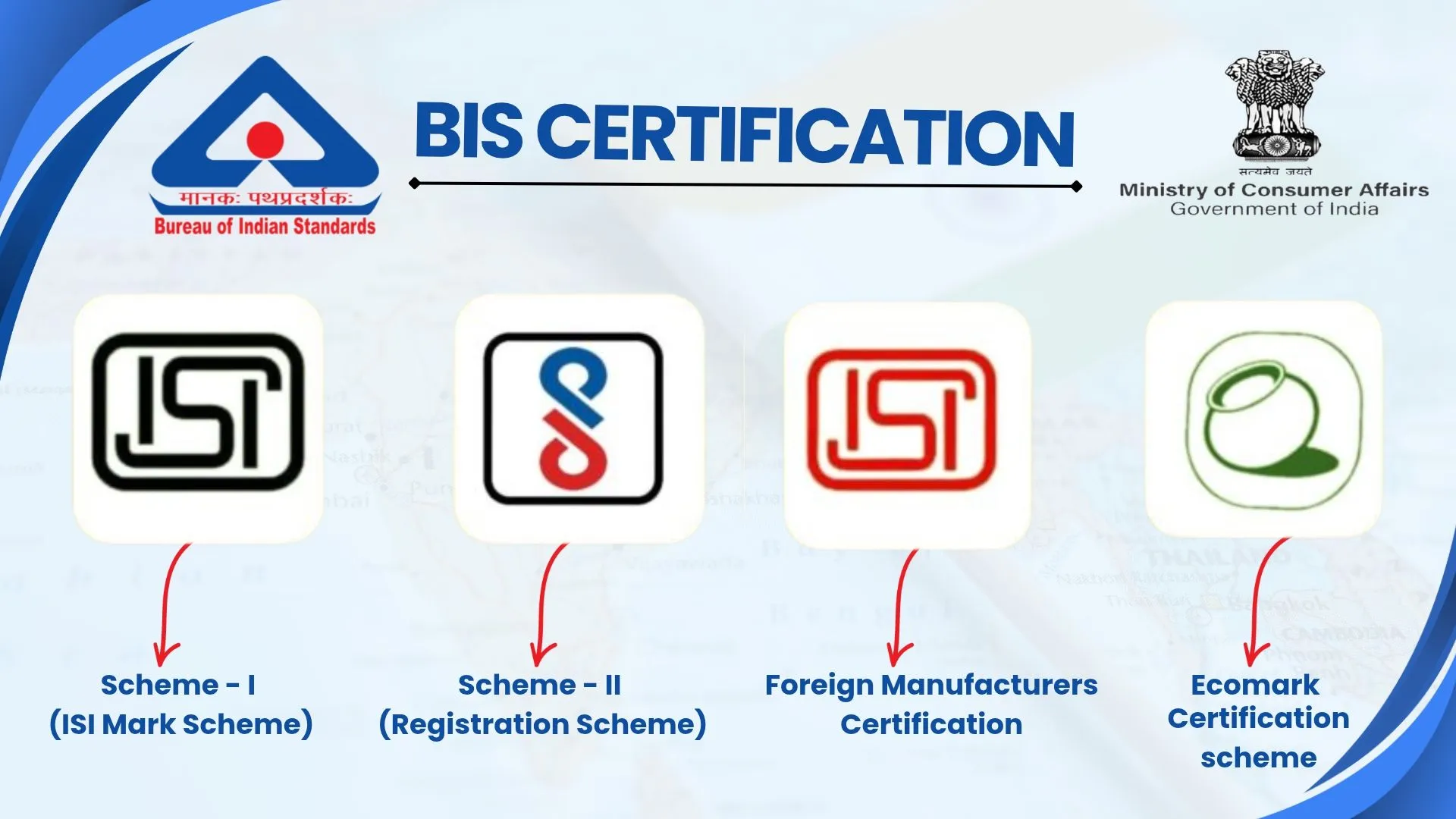
As part of the Foreign Manufacturers Certification Scheme (FMCS), eligible foreign manufacturing units can apply for BIS certification.
The process includes:
- Finding the applicable Indian Standard.
- Appointing an Authorized Indian Representative (AIR).
- Creating factory and product documentation.
- Undergoing product test at a BIS-recognized testing laboratory.
- Scheduling the BIS factory inspection.
- Acquiring the BIS licence for the use of ISI Mark.
Engaging a competent BIS consultant can help foreign manufacturers with AIR documentation, application, test arrangement, preparation for factory inspection and communication with BIS.
Challenges in Obtaining BIS Certification for Hinges
The BIS certification process calls for a strong understanding of the technology involved and the ability to coordinate with manufacturers, labs, and BIS authorities.
Challenges can include:
Identifying the Correct Indian Standard: Manufacturers can make several types of hinges. Identifying the correct Indian Standard applicable to a hinge can be a challenge.
Documentation: Filling the application form without providing adequate information or supporting documents from factory records can cause a delay in processing the application.
Product Testing: If a product does not meet requirements, the product will need to be improved and retested.
Factory Inspection: Manufacturers should also be able to sustain the improvement of their quality and testing facilities and arrangements.
Regulatory Understanding: Manufacturers/Importers may face compliance challenges due to sudden change in the interpretation of Quality Control orders (QCO) and advance notices.
An experienced BIS consultant will help manufacturers prepare for such requirements and reduce avoidable application errors.
Penalties for Non-Compliance with Hinges QCO
Manufacturing, importing, distributing, or selling products covered under a mandatory Quality Control Order without the required BIS certification can lead to regulatory action.
Non-compliance may result in:
- Penalties under the Bureau of Indian Standards Act, 2016.
- Restrictions on the sale and distribution of non-compliant products.
- Import-related compliance issues.
- Financial losses and business disruption.
- Damage to brand reputation and customer confidence.
Therefore, manufacturers and importers should verify the applicable regulatory requirements before introducing covered hinges into the Indian market.
Why Choose Aleph India As Your BIS Consultant for Hinges?
Aleph India provides BIS certification consultancy services for manufacturers and importers in India.
For many years, Aleph India has provided consultancy services for BIS. We assist our clients in understanding Indian Standards, preparing required documentation, arranging product tests, and managing the certification process.
Our consultancy support includes:
- Finding the Indian Standards applicable for hinges
- Meeting the Quality Control Order for hinges
- Preparing BIS applications
- Coordinating product tests with BIS approved testing labs
- Preparing for factory inspections
- Assisting foreign manufacturers under FMCS
- Preparing Authorized Indian Representative (AIR) documents
- BIS license compliance
We aim to help manufacturers with the certification process and, in turn, help them adhere to regulations by providing required support and guidance.
Conclusion
BIS certification for hinges is a legal obligation for manufacturers and importers to meet the requirements of the applicable Hinges Quality Control Orders. The BIS licence is indicative that the concerned manufacturer/importer has fulfilled the obligations stipulated under the Mandatory Product Certification Scheme.
From identifying the appropriate IS number to product testing, documentation, factory inspection and final licence approval, every step requires preparation.
If you are looking for an experienced BIS Consultant for Hinges, Aleph India can help and assist you at each step of the certification process with its professional consultancy and regulatory compliance support.
Aleph India can help you with understanding the BIS Certification requirements for hinge products and help you with the certification process.