BIS certification is mandatory for 488 products, while 996 products are voluntary. Know all about the types of BIS certificate, process, fees and total old and new standards. For IT and Electronic products, certification under the Compulsory Registration Scheme is mandatory for 83 product categories covering a large number of products. More than 187 Quality Control Orders have been notified for mandatory certification by BIS. Through Quality Control Orders, the concerned regulator/line ministry of the Government of India directs the mandatory use of BIS Standard Mark under a valid license from BIS. Standard Marks like ISI Mark and CRS Mark are notified based on considerations like public interest, protection of human, animal or plant health, protection of environment, prevention of unfair trade practices and national security. The mark is important for both manufacturers and consumers. Manufacturers obtain license from BIS to sell their products in the Indian market as per Indian Standards. If your product is Masonry Cement then it will get ISI Mark under Indian Standard IS 3466 and it will have unique cml no. If your product is ELECTRONIC CLOCKS WITH MAINS POWER then it will get CRS Mark under Indian Standard IS 302-2-26 and it will have unique R no. Manufacturers can easily check ISI Mark CML No and CRS Mark R no online after getting license for their product and before buying the consumer product. Indian Standard is prepared by BIS. Ministries/Departments, in consultation with BIS, publish QCO using the powers given by BIS Act, 2016, due to which the products come under BIS mandatory certification. The same BIS rules are applicable for foreign manufacturers to get license, some procedures may change like having an Indian AIR as witness is mandatory. For more details read the entire blog.
BIS Short History
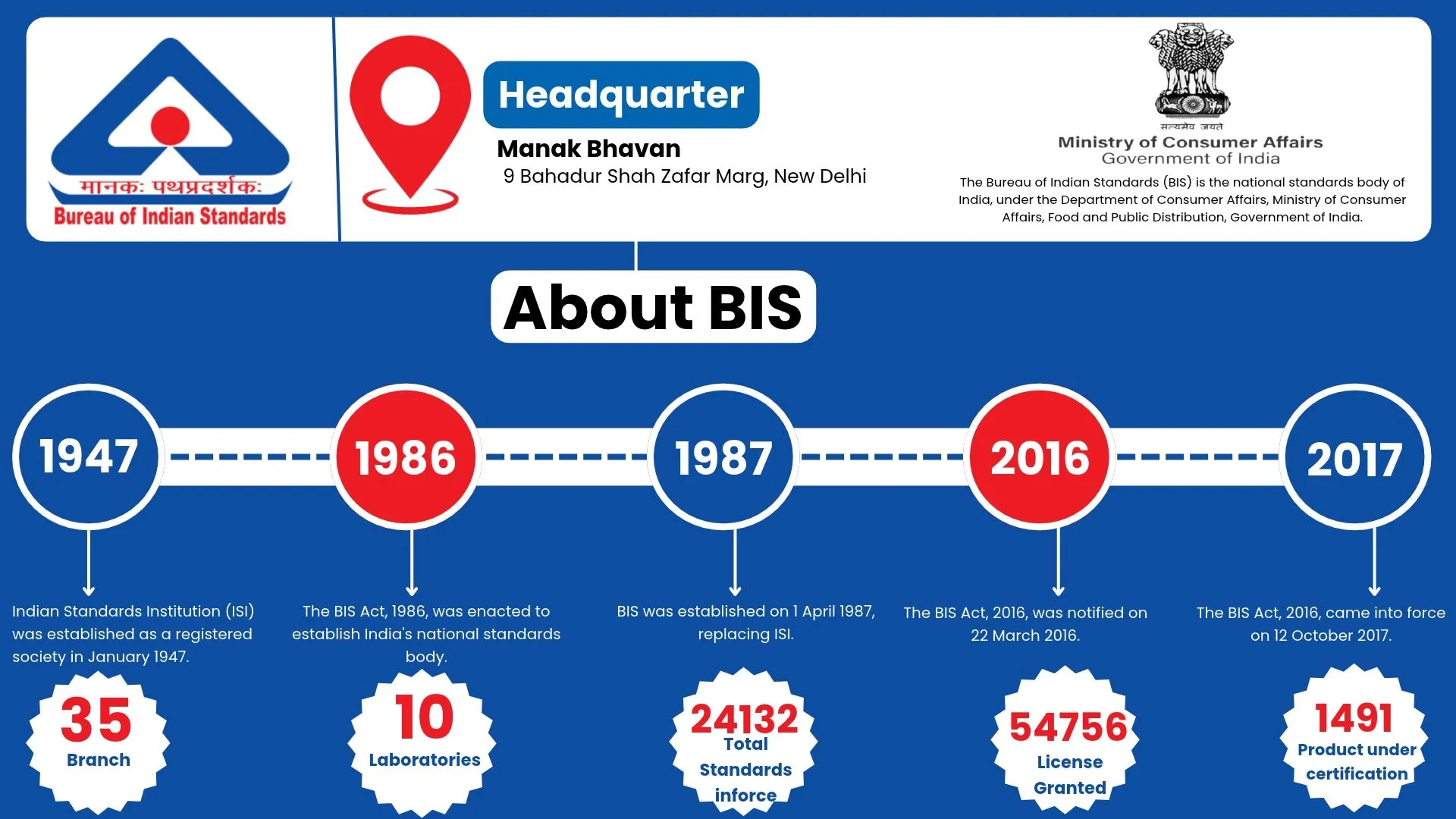
The Headquarters of BIS is Manak Bhavan, 9 Bahadur Shah Zafar Marg, New Delhi. The Bureau of Indian Standards (BIS) is the national standards body of India, under the Department of Consumer Affairs, Ministry of Consumer Affairs, Food and Public Distribution, Government of India. The organization traces its origin to the Indian Standards Institution (ISI), a registered society formed by the Department of Industries and Supplies in January 1947, which was amalgamated by the Bureau on 1 April 1987 under the Bureau of Indian Standards Act, 1986. The new Bureau of Indian Standards (BIS) Act 2016, which was notified on 22 March 2016, came into force on 12 October 2017. BIS has total 35 branches, 10 laboratories, Total standard enforced (24,132), Total License Granted (54,756) 1491 (Product under Certification), 1182 (Electronics and IT Products Standards).
BIS Certificate Full Form and 10 BIS Certification Schemes
Full Form of BIS is what?
The full form of BIS is Bureau of Indian Standards. It is the National Standards Body of India, established under the BIS Act, 2016. BIS is under the Department of Consumer affairs, Government of India.
It is mainly aimed at ensuring the quality, safety, reliability and standardisation of products, processes and services through Indian Standards and conformity assessment.
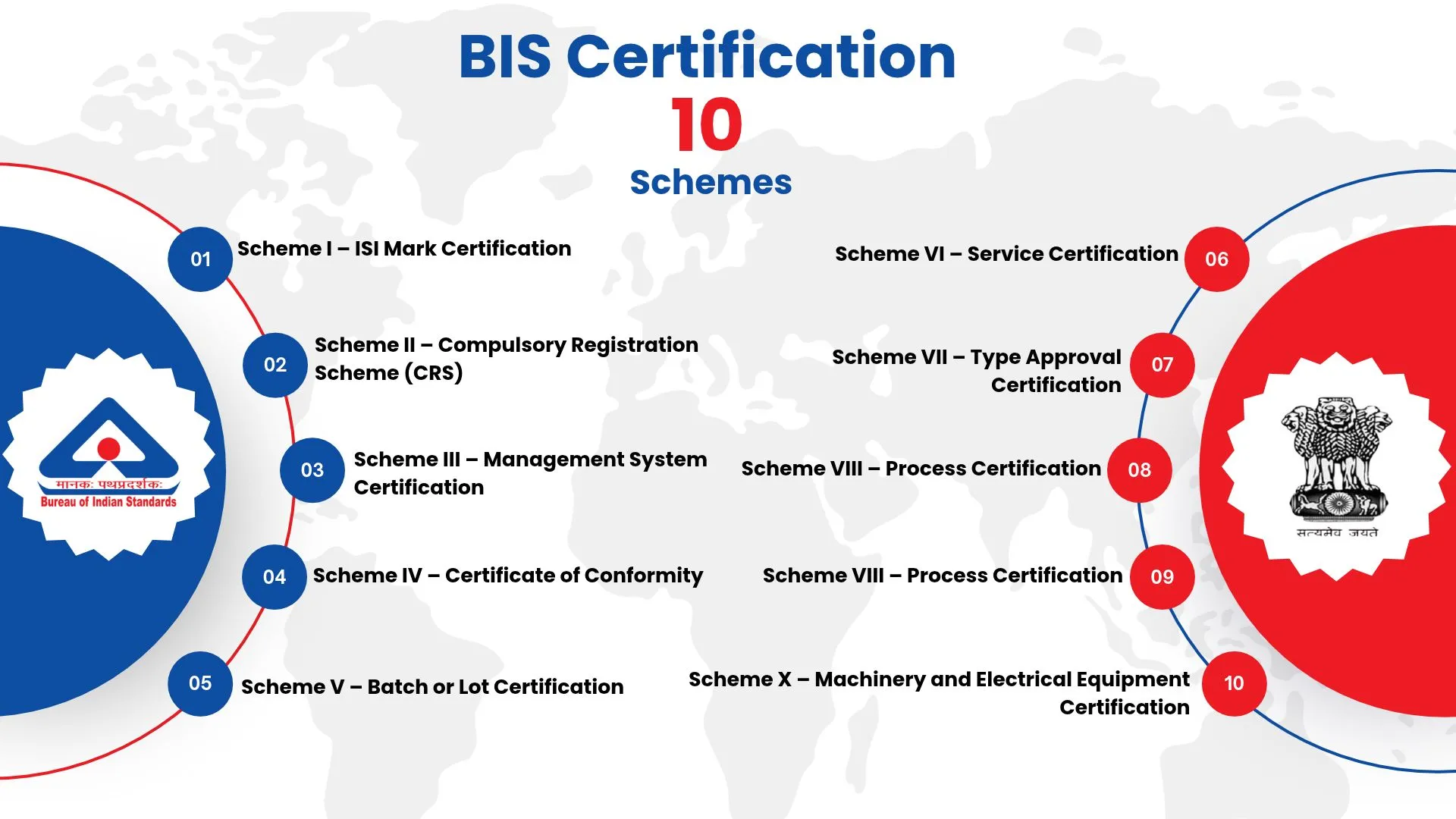
All 10 BIS Certification Schemes
1. Scheme I – ISI Mark Certification: Provides licences to manufacturers to use the ISI Standard Mark on products conforming to relevant Indian Standards.
2. Scheme II – Compulsory Registration Scheme (CRS): Covers notified electronic and IT products requiring BIS registration before sale in India.
3. Scheme III – Management System Certification: Covers management systems such as ISO 9001 (QMS), ISO 14001 (EMS) and other applicable standards.
4. Scheme IV – Certificate of Conformity (CoC): Covers specific goods and articles, such as transformer stampings, laminations, cores and bicycle retro-reflective devices.
5. Scheme V – Batch/Lot Certification: Provides certification for specific batches or consignments of goods without requiring a continuous licence.
6. Scheme VI – Service Certification: Certifies service providers based on conformity with applicable Indian Standards and service requirements.
7. Scheme VII – Type Approval Certification: Provides conformity assessment and approval for specified types of goods and articles.
8. Scheme VIII – Process Certification: Assesses manufacturing or other specified processes against applicable Indian Standards.
9. Scheme IX – Combined Certification: Covers product conformity along with management system and process requirements.
10. Scheme X – Machinery and Electrical Equipment Certification: Covers specified machinery and electrical equipment under applicable government Quality Control Orders and technical regulations.
BIS Certification Support by Aleph India
Aleph India provides consultancy support for BIS certification, including Indian Standard identification, documentation, product testing, factory inspection, application assistance and licence support. Contact Aleph India for professional BIS certification and regulatory compliance assistance.
BIS Two Main Popular Certification
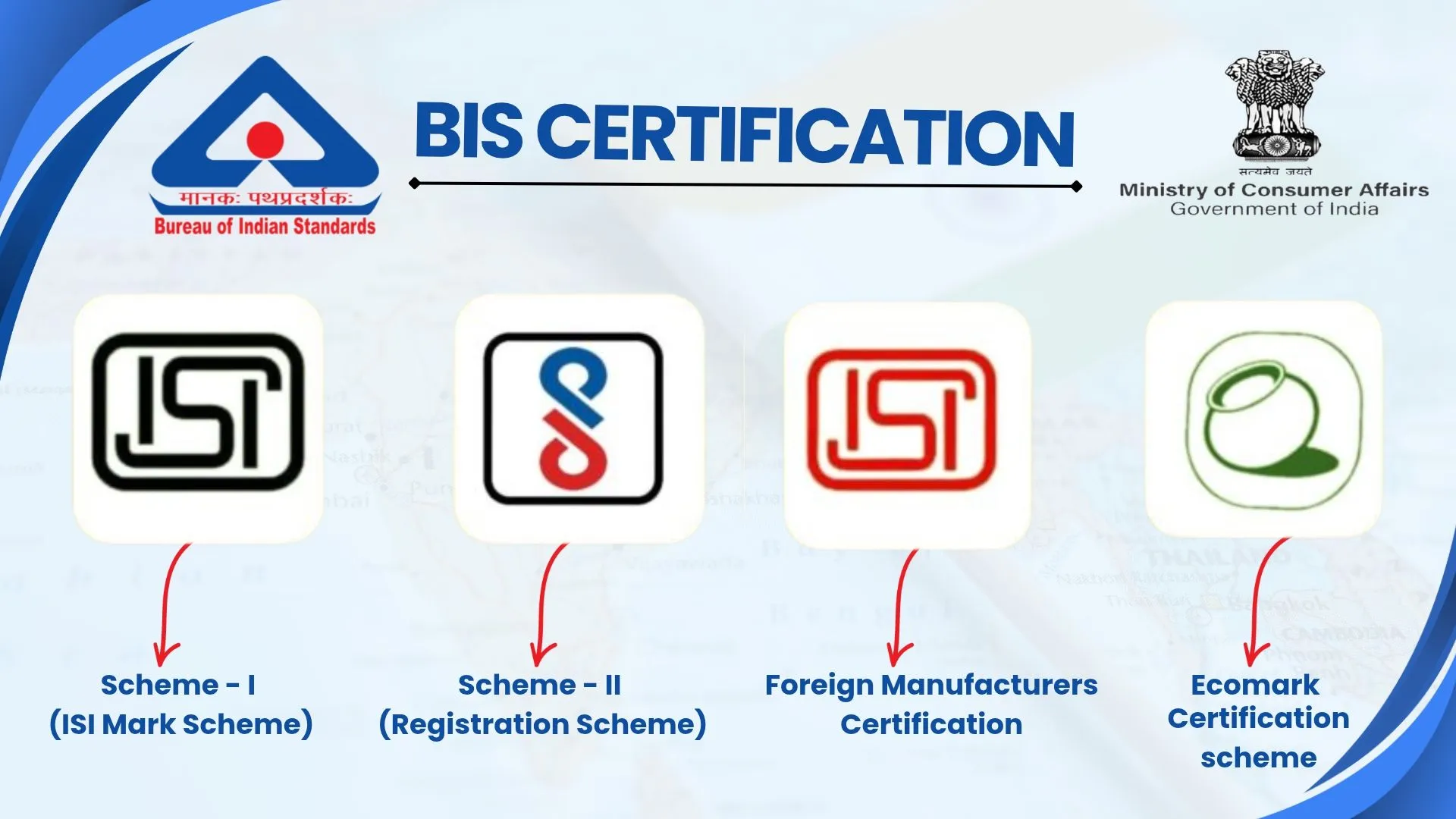
Indian and foreign manufacturers can obtain licenses for their products under BIS ISI Certification (Scheme I) and BIS CRS Registration (Scheme II) and enter the Indian market. Learn the difference between ISI and CRS.
1.
BIS ISI Certification (BIS Scheme I, ISI-Mark Scheme)
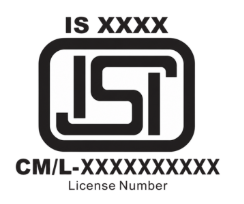
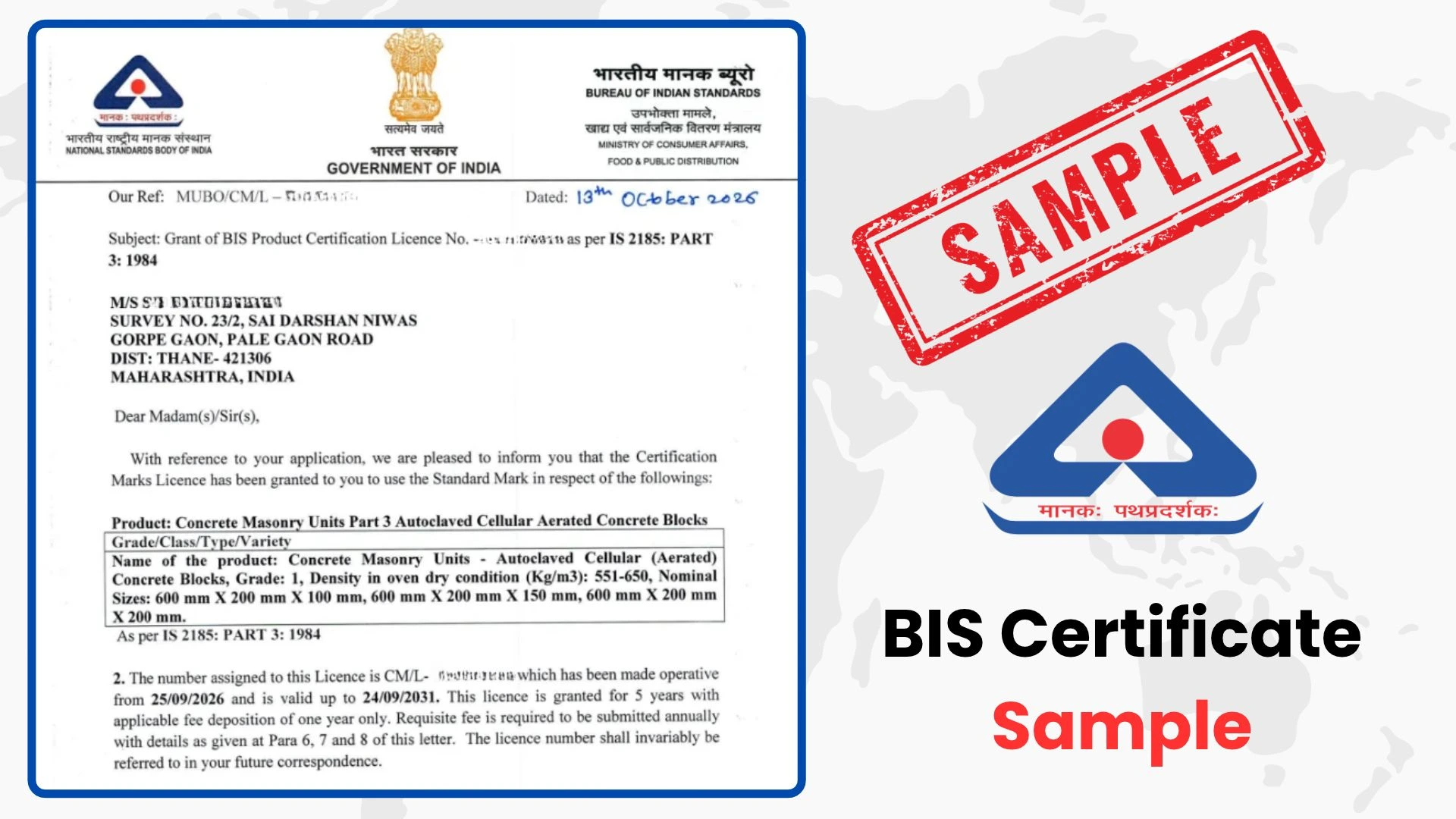
BIS certification is awarded after a factory inspection. All products bear the ISI logo, also known as the "BIS Standard Mark" or "ISI Mark," as per the ISI Mark Scheme I. Below the ISI mark is a unique 10-digit CML number, which can be used to determine whether the product is BIS certified or not. Obtaining the ISI mark is primarily for mandatory products that comply with the correct Indian standard.
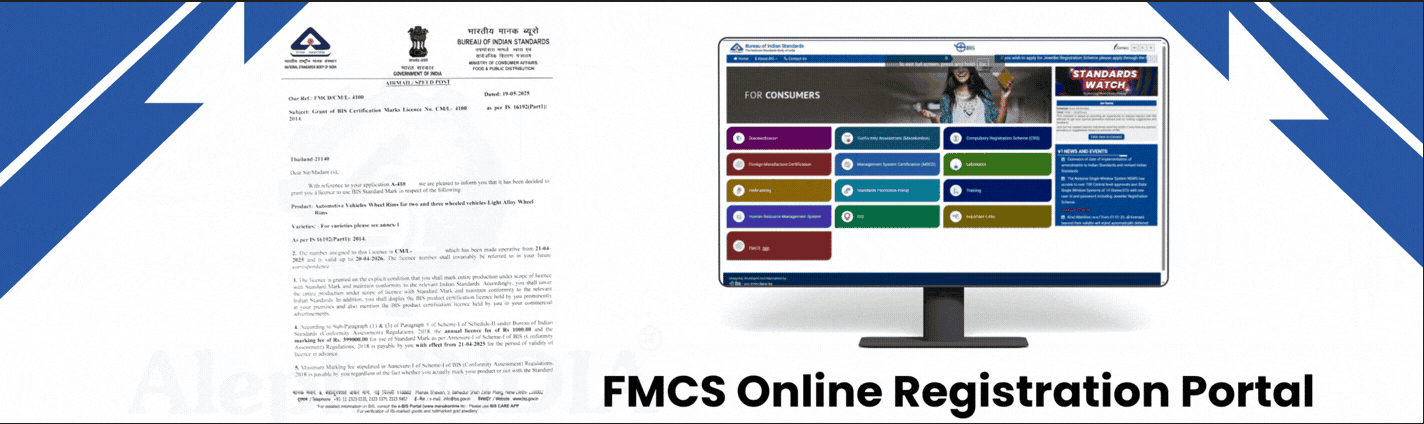
BIS ISI certification is granted by BIS under the Foreign Manufacturers Certification Scheme (FMCS) for foreign manufacturers. The Foreign Manufacturers Certification Department (FMCD) has been responsible for BIS certification under BIS since 2000. Licensing through the BIS FMCS Portal is mandatory for all products to be sold in the Indian market.
2.
BIS CRS Certification (BIS Scheme II, BIS Registration)
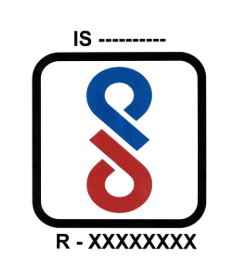
BIS certification without factory inspection for electronics and IT products is granted under BIS Scheme II, also known as BIS Registration or BIS CRS Certification. BIS registration under the CRS (Compulsory Registration Scheme) was introduced in 2012. Based on the regulations issued by the Ministry of Electronics and Information Technology (MEITY), Indians and foreigners can obtain BIS registration to sell their products in the Indian market.