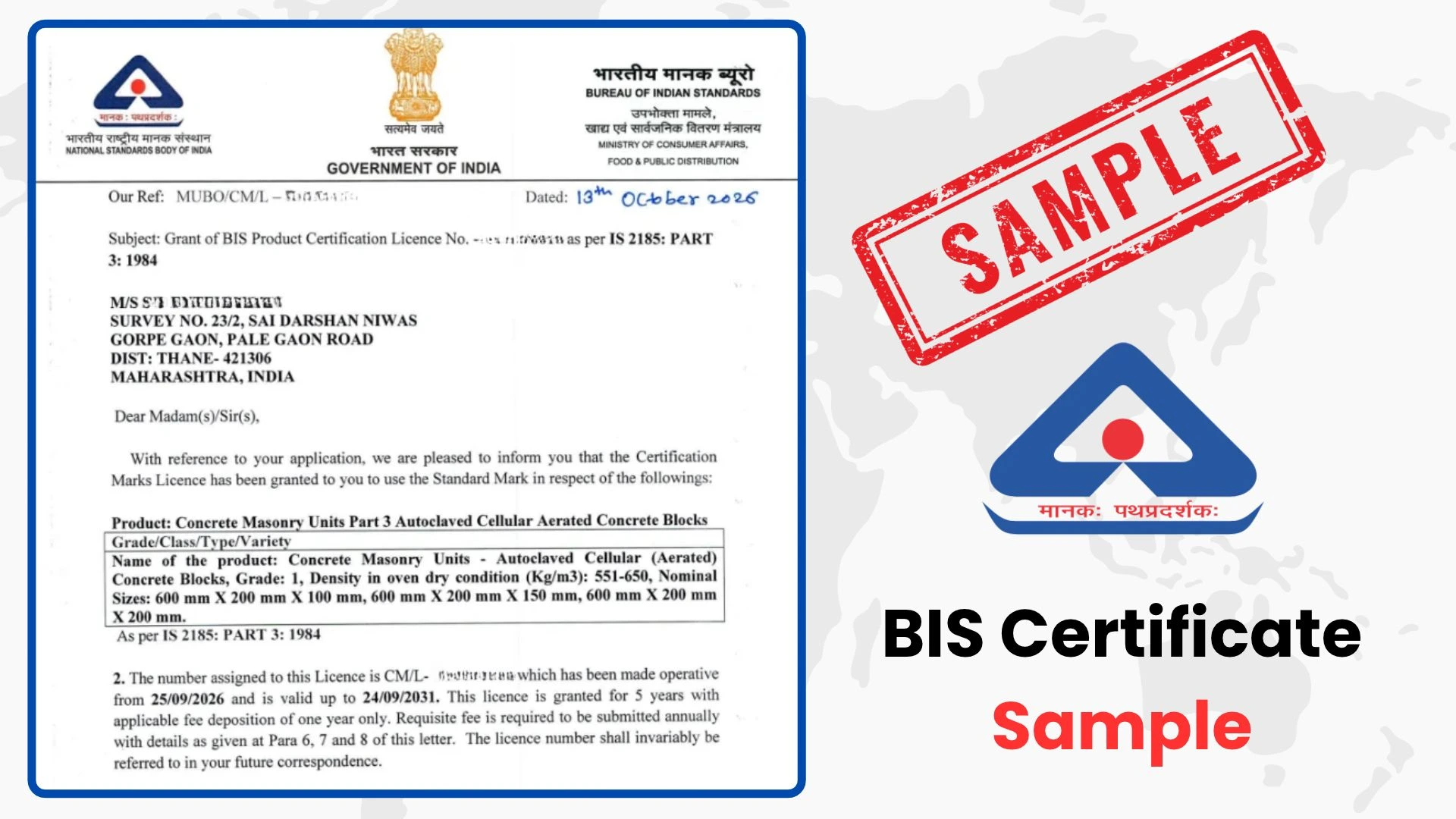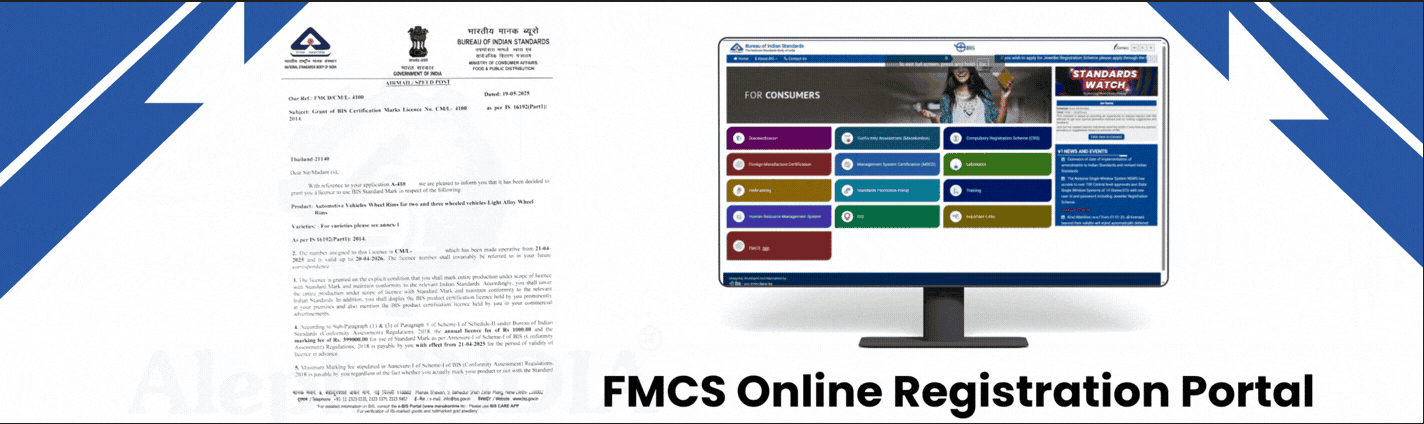
BIS Certification is Mandatory for More than 45 chemicals Products in India. Quality control order for all chemicals Products is issued by Department of Chemicals and Petrochemicals and Indian Standard BIS. Industrial and commercial chemicals for manufacturing, selling or importing in India require a unique CML No. which is given by BIS along with ISI mark at the time of license grant. This ISI mark is a guarantee of quality, stability and reliability of the products. This certification is maintained by Bureau of Indian Standards (BIS), which is the National Standards Authority of India. Everything you need to know about chemical product certifications, timelines, documents, testing, benefits in 2026, in detail.
Key Takeaways of BIS Certification for Chemical Products
- Department of Chemicals and Petrochemicals, Ministry of Government of India issues QCO for Chemicals Products.
- The Bureau of Indian Standards grants BIS certification for chemicals as per Indian Standards.
- BIS certification is a legal requirement for manufacturing, selling or importing chemicals into India.
- BIS Certification and ISI Mark guarantee the quality, stability and reliability of chemicals products.
- Before getting a license, know about product standards, application submission, testing, sampling, timeline & certification cost.
- Indian and foreign manufacturers should check the real client with company name for BIS consultancy service of their chemical products and avoid fake BIS consultants.
What Is BIS Certification for Chemicals and Who Issues It?
BIS Certification for Chemicals is a conformity assessment process to ensure that a chemical products complies with the Indian Standards (IS) laid down by the Bureau of Indian Standards (BIS). It facilitates the regulated chemicals to meet the necessary quality, safety, performance requirement before manufacturing, importation, sale and distribution in India.
The Government of India, through the concerned ministries and departments, announces Quality Control Orders (QCOs) to ensure the compulsory BIS certification of certain chemicals. Some chemicals that could be included in these orders are hydrogen peroxide, sulphuric acid, aniline, phosphoric acid, nitric acid, xylene, aniline, methylene chloride and chlorinated paraffin wax. The requirements will apply based on the relevant QCO, Indian Standard, date of implementation, and any exemptions.
BIS certification is issued under the relevant certification scheme by the Bureau of Indian Standards (BIS), Department of Consumer Affairs, Ministry of Consumer Affairs, Food and Public Distribution. Department of Chemicals and Petrochemicals publishes the list of products on which the certification requirements have to be met through QCOs.
Generally, the procedure to get BIS certification for chemicals involves identification of the relevant Indian Standard, make an application along with the necessary documents, arrange the product test at the designated laboratory or the BIS recognised laboratory as applicable and complete the relevant factory inspection and quality control. If all the conditions apply, BIS evaluates the application and issues a licence.
Once the manufacturers obtain the required licence, they are allowed to use the ISI Mark on the certified chemical products based on the conditions detailed in the licence. If applicable, foreign manufacturers may have to follow the Foreign Manufacturers Certification Scheme (FMCS).
Hence, manufacturers, importers and suppliers are advised to ensure compliance with the latest QCO notifications, applicable Indian Standards and compliance timelines before manufacturing, importing or selling of regulated chemicals in India. Compliance with regulations at the right time can prevent problems with the regulators, shipping delays, and potential penalties on business.
Importance of BIS Certification for Chemicals
- Ensures Quality and Safety: BIS certification ensures conformance of the chemicals to Indian Standards for quality, safety and performance.
- Mandatory Regulatory Compliance: Chemicals covered under applicable Quality Control Orders (QCOs) are required to comply with the respective certification requirements of BIS.
- Increases ease of Import and Trade: Good certification and labelling can ensure that the chemical products eligible are compliant with the relevant Indian regulatory norms and avoid customs delays.
- Avoids Financial Losses: Regardless of which regulations are involved, non-compliance can lead to detention of shipments, penalties, stock seizure and/or production disruptions.
- Strengthens Customer Confidence: By providing a BIS certificate, the product meets relevant standards and helps to build customers' trust and confidence in the product, manufacturers and business partners.
- Facilitates Market Access: By meeting the necessary BIS standards, businesses can legitimately sell regulated chemical products in the Indian market.
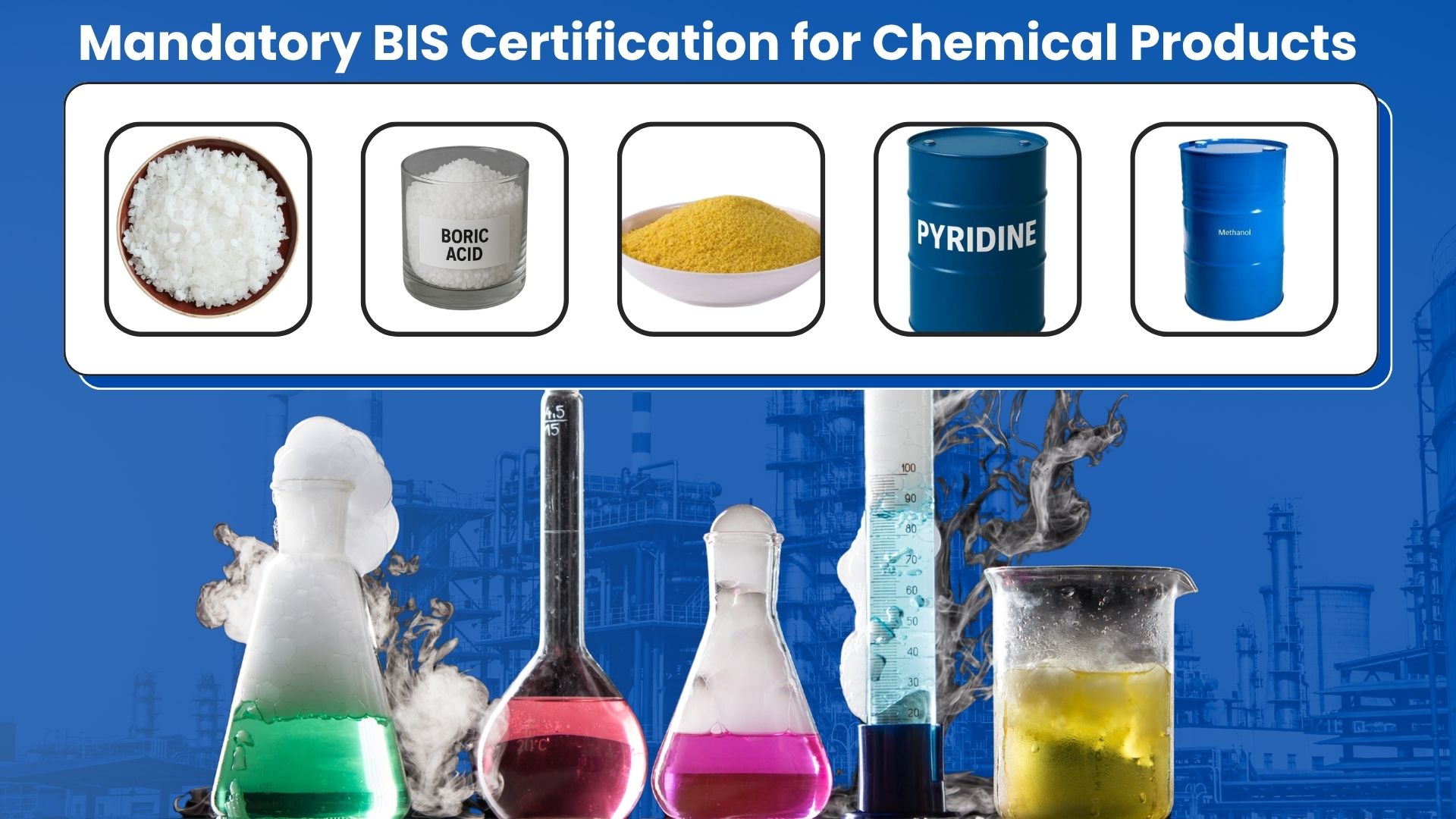
Mandatory Chemical Products Covered Under BIS certification
The table below provides information on chemical product names and IS numbers, helping manufacturers and importers understand the BIS certification requirements applicable to their products in India. Since the government periodically issues regulations and amendments regarding chemical products. Contact Aleph India for the most up-to-date and accurate information.
| Sl. No. | Product Name | Indian Standard (IS Code) |
| 1 | Caustic Soda | IS 252 |
| 2 | Boric Acid | IS 10116 |
| 3 | Poly Aluminium Chloride | IS 15573 |
| 4 | Pyridine | IS 8058 |
| 5 | Methanol | IS 517 |
| 6 | Aniline | IS 2833 |
| 7 | Acetic Acid | IS 695 |
| 8 | Phthalic Anhydride | IS 5158 |
| 9 | Gamma Picoline | IS 16113 |
| 10 | Beta Picoline | IS 16112 |
| 11 | Morpholine | IS 12084 |
| 12 | Sodium Sulphide | IS 297 |
| 13 | Potassium Carbonate | IS 7129 |
| 14 | Acetone | IS 170 |
| 15 | Phosphorous Trichloride | IS 4581 |
| 16 | Phosphorous Pentachloride | IS 11744 |
| 17 | Phosphorous Oxychloride | IS 11657 |
| 18 | Stabilised Hydrogen Peroxide | IS 2080 |
| 19 | Precipitated Barium Carbonate, Technical | IS 3205 & IS 12928 |
| 20 | Sodium Tripolyphosphate, Anhydrous, Technical | IS 6100 |
| 21 | n-Butyl Acrylate | IS 14709 |
| 22 | Ether | IS 336 |
| 23 | Ethylene Glycol | IS 5295 |
| 24 | Toluene | IS 537 |
| 25 | Terephthalic Acid | IS 15030 |
| 26 | SM (Styrene Monomer) | IS 4105 |
| 27 | Methyl Acrylate | IS 14707 |
| 28 | Ethyl Acrylate | IS 14708 |
| 29 | Vinyl Acetate Monomer | IS 12345 |
| 30 | Maleic Anhydride | IS 5149 |
| 31 | Acrylonitrile | IS 12540 |
| 32 | Ethylene Vinyl Acetate Copolymers | IS 13601 |
| 33 | Polyethylene Material for Moulding and Extrusion | IS 7328 |
| 34 | Linear Alkyl Benzene | IS 12795 |
| 35 | SBR Latex | IS 11356 |
| 36 | Synthetic Micro-Fibres for Cement Matrix | IS 16481 |
| 37 | Polyester | IS 17261 |
| 38 | Acrylonitrile-Butadiene Styrene (ABS) | IS 17077 |
| 39 | p-Xylene | IS 17370 |
| 40 | Vinyl Chloride Monomer | IS 17442 |
| 41 | Polyurethanes | IS 17397 (Part 1) |
| 42 | Polycarbonate | IS 14434 |
| 43 | EDC (Ethylene Dichloride) | IS 869 |
| 44 | Ortho Phosphoric Acid | IS 798 |
| 45 | Sodium Formaldehyde Sulphoxylate | IS 4505 |
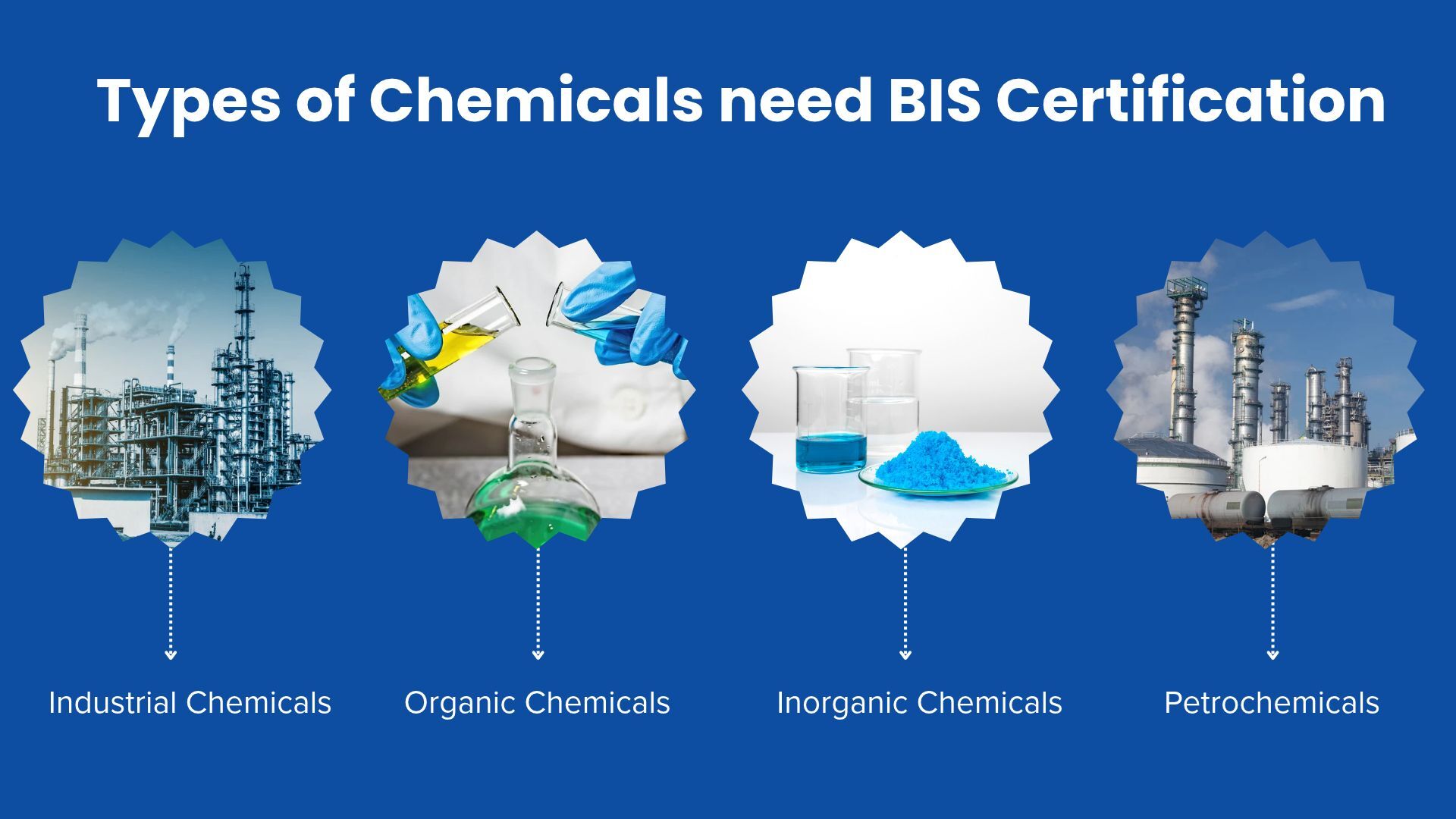
Types of Chemicals need BIS Certification
Depending on the product and the Indian Standard applicable, some chemicals can be subject to mandatory BIS certification as per applicable Quality Control Orders (QCOs).
- Industrial Chemicals: Acetic acid, caustic soda, industrial solvents, etc. which are chemicals utilized in the manufacturing and industrial processes.
- Organic Chemicals: Organic chemicals, including methanol, phenol and formaldehyde, which are subject to applicable regulatory requirements.
- Inorganic Chemicals: Chemicals as specified by the relevant standards and QCOs, including hydrochloric acid, sulphuric acid and sodium bicarbonate.
Petrochemicals: Chemicals obtained from petroleum or natural gas that are used to make plastics, resins, synthetic fibres and other industrial products.
Note: Manufacturers / importers should check to see if there's an applicable QCO and Indian Standard for each individual product.
Process to Obtain BIS Certification for Chemicals in India
Manufacturers must complete the required documentation, product testing and factory assessment before BIS gives a license. The process normally involves the following steps:
Step 1: Identify the Applicable Indian Standard
Manufacturers should verify if a mandatory Quality Control Order (QCO) exists for the chemical and if there is, what is the applicable BIS certification scheme. Choosing the right standard is vital for compliance, testing and application to be in line with the standards.
Step 2: Prepare Documents and Submit the Application
Once the standard is identified, the manufacturer needs to create the necessary documents and submit the application on the official BIS portal. The documents can contain:
A) Business registration or Certificate of incorporation
B) Manufacturing process flowchart
C) Product specifications, composition and formulation details.
D) The layout of the factory and information of the manufacturing facility.
E) The information on quality control procedures and testing equipment.
F) Relevant test reports and other supporting documents as per requirement of BIS
G) Proper and complete record-keeping can minimize application mistakes and delay in the certification process.
Step 3: Product Testing and Factory Inspection
Product testing and factory assessment is an important process of BIS certification. BIS can inspect the manufacturing facility to evaluate the production processes, Quality Control, testing facilities, raw materials and storage facilities, depending on the scheme applicable.
Samples can be taken for analysis in a BIS recognised or designated laboratory (if relevant). The laboratory test is conducted to check compliance of the chemical with the technical requirements specified in the Indian Standard. Failure to meet any of the non-conformities may necessitate corrective action and further evaluation before certification can be granted.
Step 4: Grant of BIS License and Use of the Standard Mark
If all the requirements are met, such as a satisfactory test report and factory assessment (if applicable), BIS can issue the license. In respect of schemes that allow it, the license allows the manufacturer to affix the Standard Mark (ISI Mark) on the certified product as per the terms and conditions applicable.
Applicable to the Foreign Manufacturers Certification Scheme (FMCS), foreign manufacturers are required to comply with the relevant requirements. Manufacturers are not allowed to use the ISI Mark or claim BIS certification without being authorized to do so.
Step 5: Surveillance, Compliance, and License Renewal
Continuous compliance with the Indian Standard and conditions of license are necessary for BIS certification. As required by the certification scheme, BIS can also carry out surveillance inspections, inspect quality control records or arrange for product testing to check for continued conformity.
Manufacturers need to have suitable quality control procedures, meet marking requirements, and file renewal applications on time. Validity and renewal of license will be based on the applicable BIS scheme and conditions mentioned in the license.
Compliance facilitates manufacturers to continue to provide certified chemical products and fulfill the applicable regulatory obligations in India.
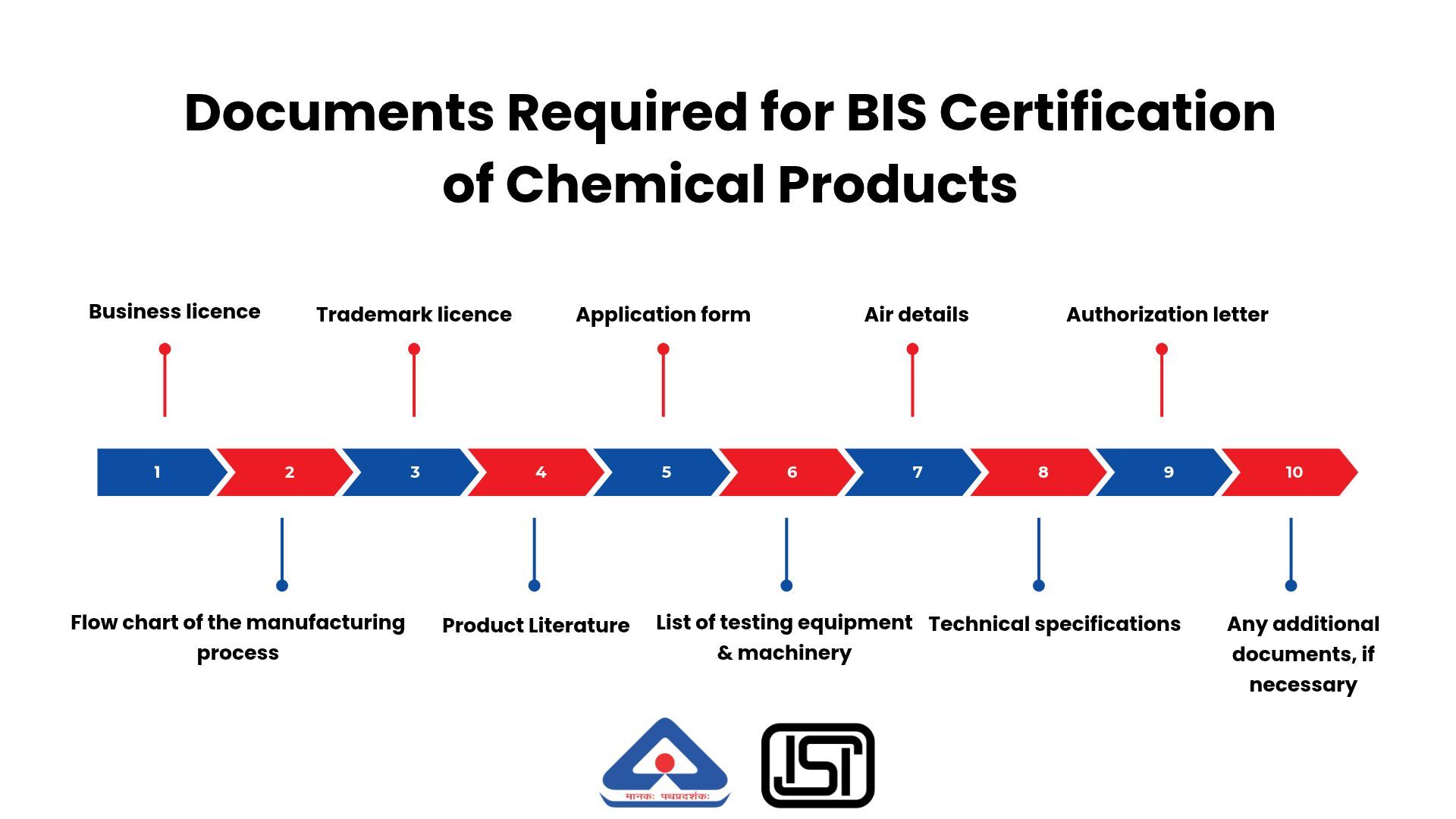
Documents Required for BIS Certification of Chemical Products
- Business licence
- Trademark licence
- Application form
- Air details
- Authorization letter
- Flow chart of the manufacturing process
- Product Literature
- List of testing equipment & machinery
- Technical specifications
- Any additional documents, if necessary
BIS Certification Cost of Chemicals
| Type of fee | New Application | Renewal | Inclusion |
| Application Fee | Rs. 1000/ | Rs. 1000/ | - |
| Processing Fee* | Rs. 25000x2 = 50000/ | Rs. 25000x2 = 50000/ | Rs. 15000x2 = 30000 |
| Registration Fee* | Rs. 1000x2 = 2000/ | Rs. 1000x2 = 2000/ | - |
| Total | Rs. 53000/ | Rs. 53000/ | Rs. 30000/ |
The cost of BIS certification for chemicals may vary depending on the product. If all submitted documents and test reports are in order, the BIS license will be issued within 20 working days. If the documentation and compliance with regulations are found unsatisfactory upon initial review, and the deficiencies are not rectified within 30 days, the BIS official will issue a rejection notice.
BIS Consultancy Service for Chemical Products
Are you looking for BIS certification for chemical products? Aleph India manages portal submissions, documentation, and regulatory fees, and offers free consultancy to help you obtain your BIS license without delay.
We have helped over 2000+ Indian and foreign manufacturers obtain BIS certification. Our clients include AIM Alloys (IS 1110:2026), Greenox Oils Private Limited, Earthcon Lubes, and Extra Blue Private Limited (all IS 17042 Part 1:2020).
Aleph India operates under the guidance of the former Deputy Director General (BIS), so you receive expert advice based on real-world knowledge of BIS rules, audits, and licensing procedures.
Beware of fake BIS consultants who promise quick licenses and then disappear after receiving payment. Always verify experience, ask for a clear breakdown of fees, and choose a reliable consultancy. Contact Aleph India today for a free consultation and get your BIS license for chemical products the right way.