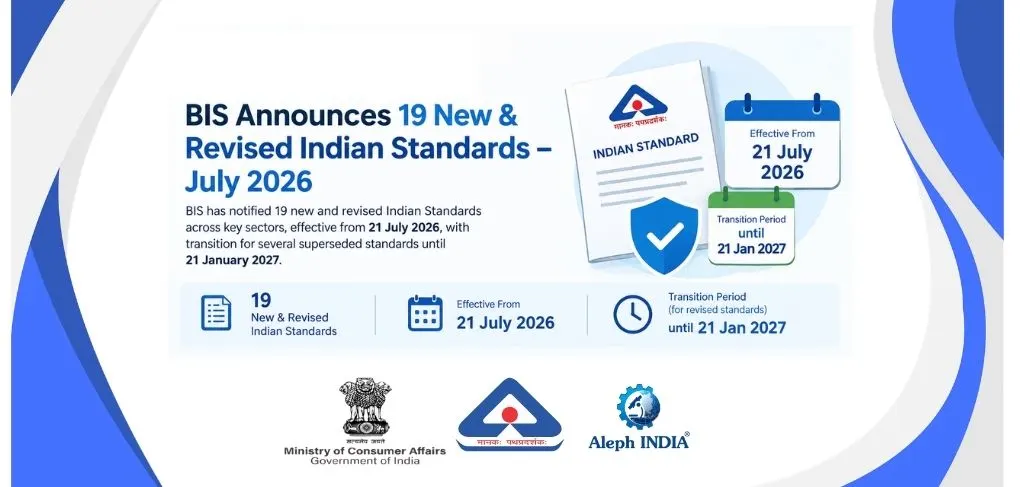
Bureau of Indian Standards (BIS) has lately made a drastic move in the process of quality and standardization in India by rescinding some of the old Indian Standards. Such a step indicates the wider intent of the government in matching local standards to the international standards, in enhancing the quality of products, and in bolstering the competitiveness of India in the global markets.
BIS has withdrawn 9 Indian standards in various fields like reference materials, risk management, supply-chain security, machinery safety and household electrical appliances, according to a notification dated January 7. These standards that used to be applicable have now been deemed to be out of line with the global practice and the latest technological changes. The fact that they are withdrawing is a significant shift towards a more modern, agile and globally compatible standards framework.
The Indian government has always underlined that standards cannot be maintained in the same way. With the changing dynamics in the industries, changes in technologies, and changes in the international trade systems, the regulatory systems have to keep up with these changes. The compromised standards had been said to be outdated, thus leaving possible loopholes between the Indian products and the world standards. The elimination of these obsolete benchmarks will help BIS to eliminate redundancies and open the path to the new standards that would be more linked to the current industrial and safety needs.
This is in a larger reform program that is being engaged in the quality ecosystem in India. In November and December the government repealed a number of Quality Control Orders (QCOs) and the total number of products covered by a mandatory QCO now stands at 736. These reforms were to streamline the regulatory oversight and at the same time maintain a focus on quality enforcement that is relevant and effective.
Substituting this strategy, another group of 30 standards was also announced simultaneously at the end of December. These standards are strategic in areas that are of great importance to the process like textiles, aerospace material, smart mobility, mining safety, and agro-textile. The task is simple, to match the Indian products with the international standards of quality to increase the possibilities of export and the trust of foreign purchasers.
This growing interest in global harmonization can already be seen in the general standards portfolio of BIS. Currently, there are almost 23,700 Indian Standards that are in operation, and literally 94 percent of them are aligned with international ISO and IEC standards. This is a high degree of more than 50 percent congruency which shows the enthusiasm of India in being an active participant in international trade without compromising high-quality assurance systems.
The BIS certification mark has continued to develop as a mark of trustworthiness and credibility in many industries including agriculture, manufacturing, infrastructure, and technology. Quality certification is no longer seen as something that a company is obligated to have done as a regulatory measure; it is now also seen as a strategic benefit. To the manufacturers and more so those which are also directed to the export markets, BIS compliance is an indication of consistency, safety and compliance with internationally accepted standards.
The certification data also indicate the increasing adoption of BIS standards. As of November 2025, manufacturers had received 26,793 notified products certifications and 24,330 voluntary certifications. It is worthwhile to mention that a large proportion of this uptake is on Micro, Small, and Medium Enterprises (MSMEs) meaning that smaller businesses are progressively turning to quality standards as a form of gaining credibility and access to the market.
In general, the elimination of old standards cannot be regarded as a retrogression but rather a re-calibration. By eliminating the outdated norms and ready to implement new ones, BIS is strengthening the quality infrastructure in India. This will make sure that the standards are current, future-oriented and user-friendly to innovation, as well as serving the interests of the consumers.
With the constant process of internationalizing India, these regulatory reforms are important in enhancing the confidence of the Indian products. When quality meets the global expectations, it turns out to be a potent instrument of economic growth, competitiveness and long-term sustainability.
Was this article helpful?