New Delhi, January 19, 2026 — The Ministry of Environment, Forest & Climate Change (MoEFCC) has issued a significant notification that fundamentally changes how companies can fulfill their Extended Producer Responsibility (EPR) obligations for plastic packaging waste. This move marks a decisive step toward stricter enforcement of India's plastic waste management framework.
What's Changed?
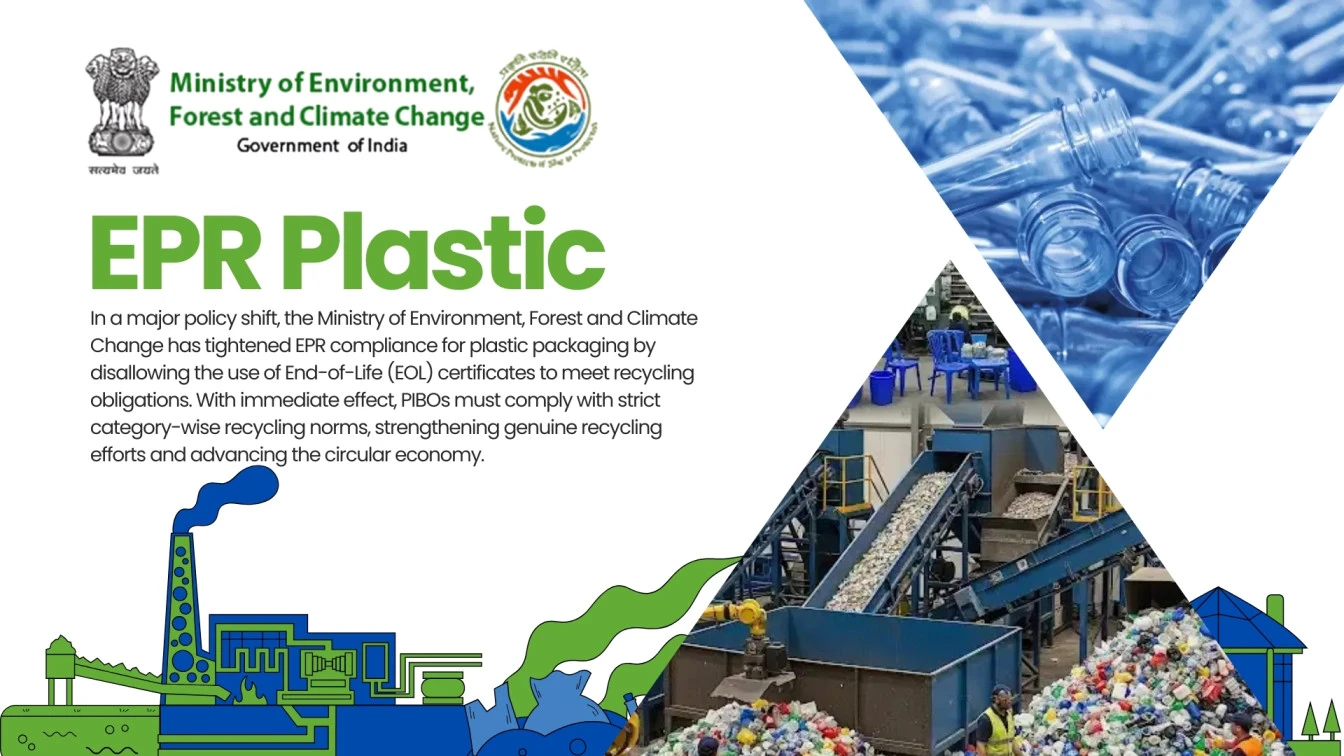
The notification, issued on January 19, 2026, withdraws a previous provision that allowed companies to use End-of-Life (EOL) disposal certificates to meet their recycling targets. This reversal comes after the Central Pollution Control Board (CPCB) had temporarily permitted this flexibility through a notice dated November 28, 2025.
Key Provisions
1. Category-Specific Compliance Required
Producer, Importer, and Brand Owners (PIBOs) must now fulfill their EPR obligations using certificates from the same recycling category only. The three recycling categories (I, II, and III) for plastic waste can no longer be interchanged.
2. EOL Certificates Cannot Offset Recycling Targets
In a significant policy tightening, companies can no longer use End-of-Life disposal certificates to meet their recycling obligations. This aligns with Clause 8.2 of the EPR Guidelines, which establishes a clear hierarchy:
- Surplus in reuse can offset reuse, recycling, and EOL disposal
- Surplus in recycling can offset recycling and EOL disposal
- Surplus in EOL disposal cannot offset reuse or recycling
3. Immediate Effect
The CPCB's earlier notice allowing EOL certificates for recycling obligations has been withdrawn with immediate effect, leaving no grace period for transition.
4. Annual Return Filing Deadline
All registered PIBOs must file their Annual Returns (ARs) on the EPR portal by January 31, 2026 — giving companies just 12 days from the notification date.
Understanding the EPR Framework
The Extended Producer Responsibility system holds manufacturers, importers, and brand owners accountable for the entire lifecycle of their plastic packaging. Under the Plastic Waste Management Rules, 2016 (as amended in October 2023), companies must ensure proper collection, segregation, and processing of plastic waste equivalent to the packaging they introduce into the market.
The Three-Tier Hierarchy
The EPR framework operates on a waste management hierarchy:
1. Reuse (highest preference)
2. Recycling (middle tier)
3. End-of-Life Disposal (last resort)
This hierarchy reflects environmental best practices, prioritizing circular economy principles over disposal.
Why This Matters
Environmental ImpactBy preventing companies from using EOL disposal certificates to meet recycling targets, the government is:
- Pushing for genuine recycling rather than disposal
- Encouraging investment in recycling infrastructure
- Promoting circular economy principles
- Reducing plastic waste ending up in landfills or incineration facilities
Business ImplicationsCompanies may face several challenges:
- Higher costs: Recycling certificates typically cost more than EOL certificates
- Compliance pressure: The immediate withdrawal gives little time for adjustment
- Supply constraints: Demand for category-specific recycling certificates may exceed supply
- Operational changes: Companies may need to restructure their EPR fulfillment strategies
Temporary Relief Mechanism
The notification does reference Clause 15A of the EPR Guidelines, which permits limited cross- category certificate purchase where surplus exists in one category and deficit in another. However, this provision expires at the end of FY 2025-26, indicating the government's intent to phase out all such flexibility mechanisms.
What Companies Need to Do Now
Immediate Actions:
1. Review current EPR portfolio: Assess certificates held versus obligations across all three recycling categories
2. File Annual Returns by January 31, 2026: Ensure timely compliance with the reporting deadline
3. Secure category-specific certificates: Procure additional recycling certificates if needed
4. Plan for FY 2025-26: Develop strategies that don't rely on EOL certificates for recycling targets
Note: Additional EOL certificates transferred to the Annual Report for FY 2024-25 can still be used for EOL obligations in subsequent years.
The Road Ahead
This notification signals India's commitment to strengthening its plastic waste management regime. While the immediate impact may create compliance challenges for businesses, the long- term goal is clear: drive genuine waste reduction, reuse, and recycling rather than reliance on end-of-life disposal options. The policy tightening also reflects India's broader environmental commitments and its push toward a circular economy for plastics. Companies operating in India will need to adapt their packaging strategies, invest in recycling infrastructure, and potentially redesign products to meet these evolving regulatory requirements.
Conclusion
The January 19, 2026 notification represents a "course correction" in India's EPR implementation, closing loopholes that may have undermined the system's environmental objectives. While this creates short-term compliance pressure, it ultimately serves the larger goal of sustainable plastic waste management.
All registered PIBOs should treat this as a priority matter, ensuring compliance with the new rules and timely filing of annual returns. The era of using disposal certificates as a shortcut to meet recycling obligations has definitively ended.